
Brought to you by…Rillion

What should the finance function look like in the age of AI?
I keep thinking about this question and what it means for my people, systems, and processes. Most finance teams I talk to are being slowed down because of legacy org structures.
Join this webinar next month to hear how Rillion and Outpost have done it
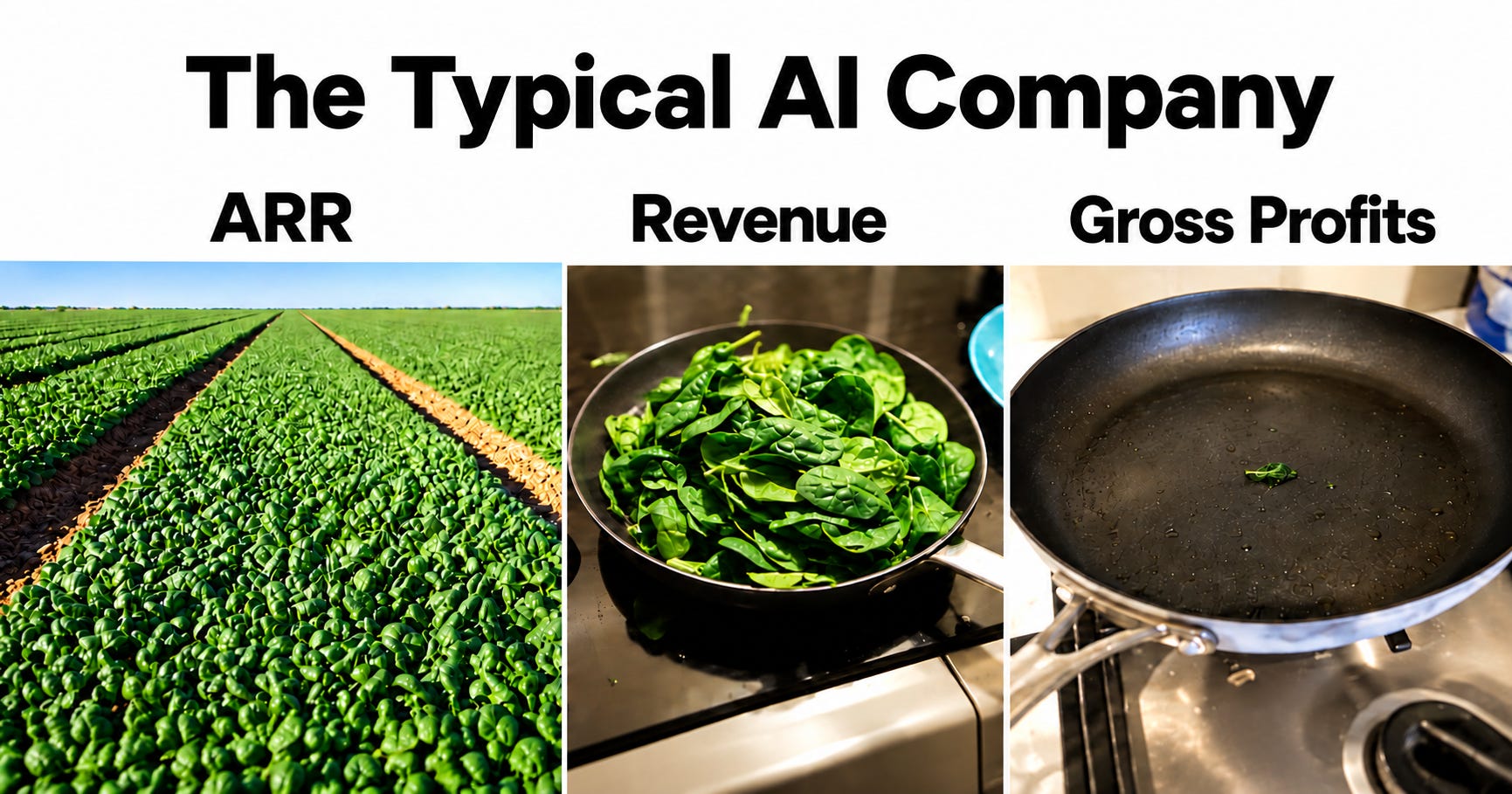
The topline “revenue” metric that everyone in tech talks about is ARR (or annual recurring revenue). But ARR ain’t what it used to be in a traditional SaaS model….
Many AI companies have “ARR” that is:
Not Annual (e.g. annualized from short periods of usage)
Not Recurring (e.g. one-time or unlikely to repeat)
Not Even Revenue (e.g. can’t recognize GAAP revenue)
Aggressive ARR definitions can create large gaps between “ARR”, GAAP revenue, and cash actually collected. A big gap between ARR and GAAP revenue doesn’t automatically mean anything is wrong. Fast growth can create a large gap. But sometimes fast growth hides the other potential issues.
When I ask teams to explain the gap between ARR and GAAP revenue, many of them act surprised that they should have to explain the difference. They have never reconciled it…
Investors are (or should be) asking more questions…

Reconcile ARR → GAAP Revenue
Performing an ARR → GAAP revenue reconciliation does two things:
Makes sure I don’t look like an idiot in front of the board
Validates that current ARR methodology is still appropriate
Few things make a CFO (or CEO with their board) lose credibility quicker than not being able to explain ARR vs GAAP revenue (and cash). And if you can regularly review this type of reconciliation then it will force you to determine if your ARR definition is drifting because of changes in the business.
Below is an example of the reconciliation I perform:
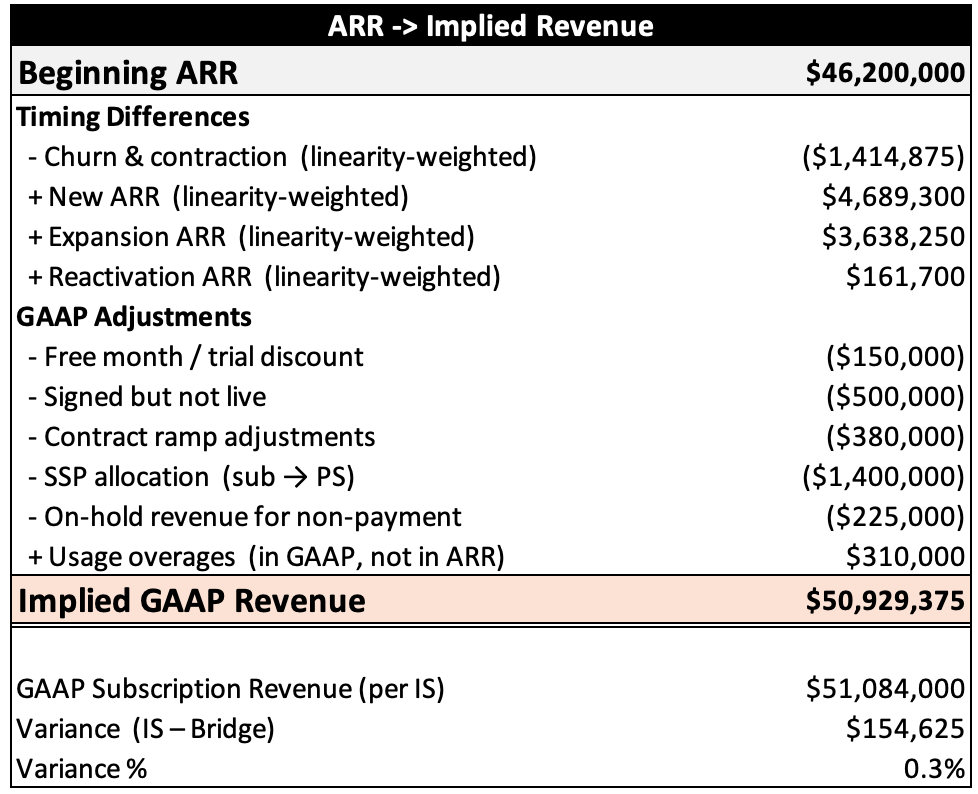
It’s obviously not going to perfectly tie out ($155K difference remaining) because we are using high-level assumptions to get reasonably close. So I would be pretty happy with only a 0.3% difference.
Timing Differences
ARR is a snapshot metric, while GAAP revenue is recognized as it is earned.
This means that companies growing really fast will report a lot more ARR than GAAP revenue. The same idea applies to companies that are very back-end loaded in their ARR bookings in the period.
In an extreme example, if a company has $1M of ARR at the beginning of the year and booked $10M ARR on the last day of the year then you will see 1,000% ARR growth. But GAAP revenue might be nearly flat because, under GAAP, they recognized at most only 1 day’s worth of revenue (so around 1/365th of ARR), assuming the contract starts on December 31st.
So a big difference between ARR and GAAP revenue isn’t necessarily a bad thing, but you should be able to explain it.
GAAP Adjustments:
There are a lot of GAAP differences from your definition of ARR. Below are a few common ones:
Free Months: This should get spread over the contract term for GAAP, but might get ignored for ARR or just averaged into the ARR number.
Ramps: Price-only ramps get spread across the contract for GAAP revenue while service ramps (more seats, usage, etc) get recognized as earned from additional services. ARR often does something a little different.
SSP Allocation: If you have professional services then GAAP may require an allocation out of subscription revenue and into services (can be material especially when companies give away services for free)
Contract Amendments: GAAP may require one-time catch-ups of revenue or prospective adjustments to the contract
Usage-Based Revenue: For GAAP, if it is purely usage-based, then revenue is recognized as consumed but ARR might do an estimate, not include spikes in usage, take a trailing average, etc.
On-hold Revenue: For GAAP, sometimes you have to stop recognizing revenue on a contract (usually because of significant concerns with cash collectability from a customer). But the ARR often doesn’t fall off until the end of the contract. Bad debt expense is normal, but at the point when the cash collection is doubtful you may need to stop recognizing revenue on the contract. For instance, if an annual contract billed upfront remains unpaid after six months and there is no indication the customer will pay, you should reassess whether further revenue recognition is appropriate.
Gross vs Net: If you resell something then GAAP might have to show the net amount (the cash proceeds you keep) vs the gross selling price. But for ARR purposes you take gross. FWIW - I think GAAP and ARR should be consistent here.
Refund/Credits: If your CSM team gives a refund for satisfaction issues then that reduces GAAP revenue, but might not impact ARR
These bridge items aren’t necessarily bad, but they can point to an aggressive non-standard ARR definition. If you reconcile and report it, then everyone will at least be on the same page about what ARR actually means.
Revenue to Cash Bridge
ARR is a hope, GAAP revenue is a judgment, and cash is a fact.
The above is particularly true for private companies. And very true for smaller private companies whose accounting practices might not be great (or who are being aggressive with their rev rec)
Below is a high-level summary of the revenue to cash reconciliation I do (sometimes called a “cash proof”).
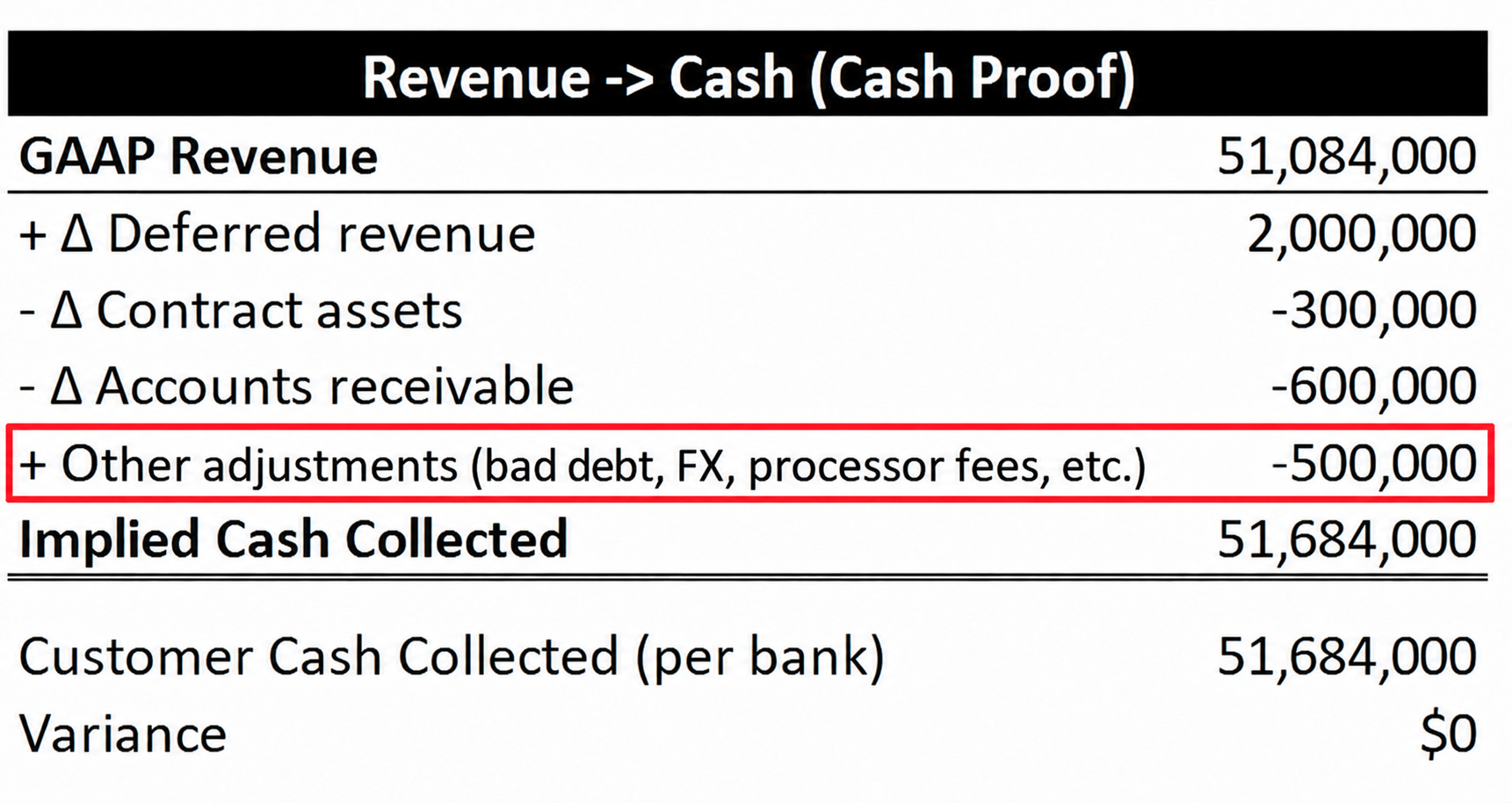
In theory, revenue should match cash after adjusting for related balance sheet changes that impact timing differences between cash and revenue - upfront payments (deferred revenue), pending cash collections (AR), etc.
If only it were that easy…because you always have to watch out for the “other adjustments” bucket. This is often the dumping ground for everything that doesn’t turn into cash. The biggest item is usually bad debt expense. Pay attention to growing/large bad debt expense
Here are a few other common things to watch out for when building this bridge:
Sales Tax: You need to remove sales tax collected from your total billings number and your customer collections per the bank. It’s not your money…
Gross vs. net presentation mismatches: An example of this is when a payment processor like Stripe nets fees before remitting. Your bank shows net cash but your revenue was gross.
Foreign currency translation adjustments: When multi-currency lines are converted at different rates than what was booked you will have a difference if there are material changes.
Final Thoughts
These reconciliations matter because they force you to stay honest in what ARR actually is. If ARR doesn’t ultimately lead to revenue and cash then it’s a fake metric anyways.
Board Reporting. I have started to include an ARR to rev rec reconciliation in the appendix. It keeps everyone honest about what ARR is and the board loves it.
Revisit ARR Definitions: Most companies need to redefine / evolve how they define ARR for the AI era. Your pricing, contracts, etc., have changed so how you define ARR may need to change too. “ARR” should turn into GAAP revenue and it shouldn’t take a really long time for that to happen.
Can AI Help Reconcile? Obviously. And you don’t need some special AI prompt. You can probably just grab the link to this newsletter and feed it to Claude/ChatGPT and ask it to help you build the reconciliations. Then just build a Skill to do it going forward after you figure out all the buckets you want to see in the recon.
Do these reconciliations and explain them to your team and board. That builds trust and gets everyone aligned.
Footnotes:
Join Rillion’s webinar next month and hear how to build your finance function for the AI era
Subscribe and share with your friends
*Disclaimer: Informational and educational purposes only. Nothing here is investment, legal, or tax advice.
The point about revisiting ARR definitions was especially useful. When a company changes its definition, how much historical data would you recast for the board? I'd want to see how much of the reported growth comes from the business and how much comes from the new definition.