
Brought to you by…

Deel’s Financial Path
Deel is a company that continues to surprise me with their financial metrics.
But growing as fast (and efficiently) as they have isn’t luck. And they can’t slow down now. Every company is facing an “accelerate or die” moment. Deel is choosing acceleration…
Revenue Growth
$0 → $100M ARR in 20 months: A record growth rate at the time (before the AI growth madness). “I am sure their ARR definitions are aggressive, right?”
$100M → $1B ARR in 6 years: One of the fastest companies to hit $1B ARR. “Aren’t they just a payroll company? They can’t be growing this fast!”
And the “SaaSpocalypse” hasn’t slowed Deel down….
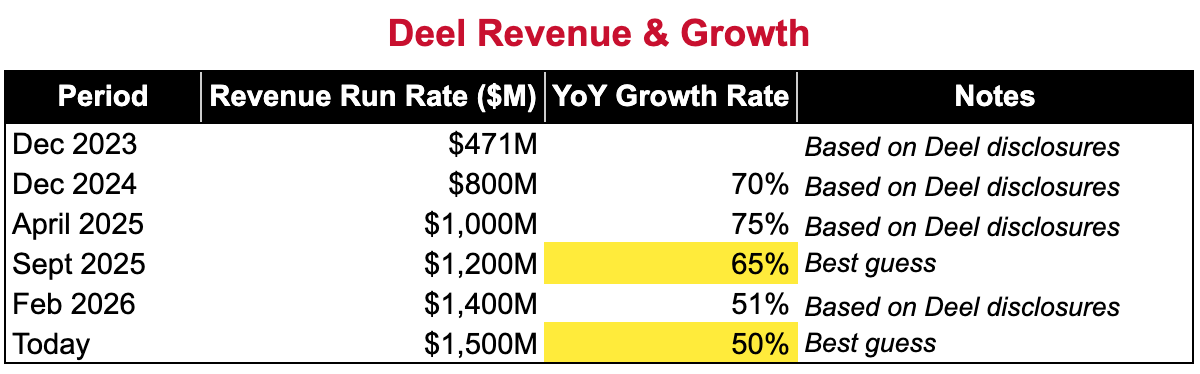
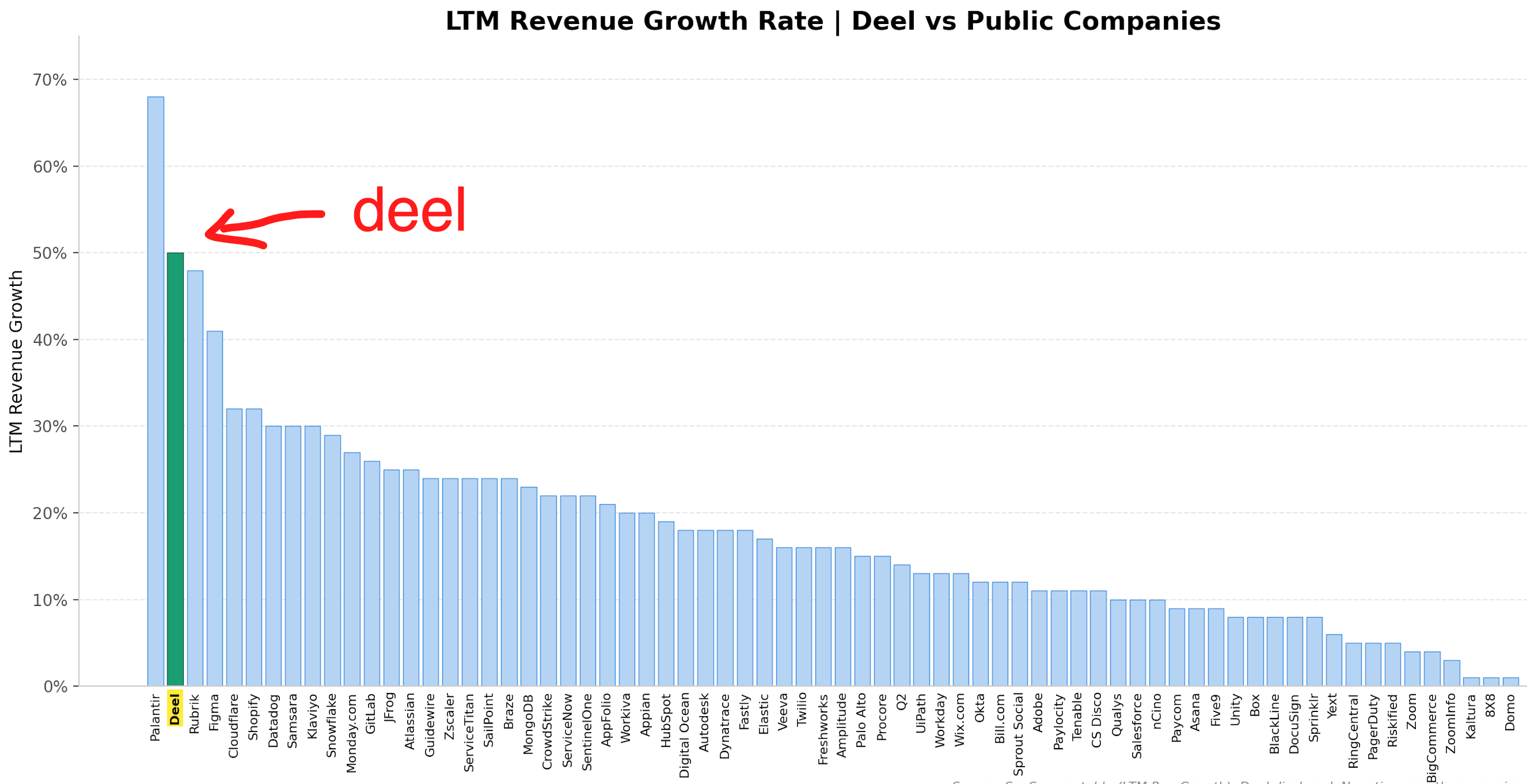
Despite the insane growth rates you might see among some private hot AI companies, 50% growth at $1.5B ARR is incredible. At least top-decile.
They are growing faster than every public software company (except for Palantir).
Profitability
After doubting their revenue growth, my next instinct was to assume they are burning cash like there is no tomorrow. “A payroll company probably has terrible margins, right?”
Last I heard, a few months ago, they have ~17% EBITDA margins…which is also best-in-class, especially considering their high growth rate…
Deel’s “Accelerate or Die” Moment
I recently sat down with Deel’s new CFO, Joe Kauffman, to discuss how Deel is accelerating in the age of AI and the importance of capital allocation to succeed today. Deel brought Joe in to be the leader that is able to take Deel public (he has the right experience).
Every single company is facing an “accelerate or die” moment in 2026. Below is how Joe and Deel plan to accelerate and become an AI beneficiary.
#1 Metric: High, Durable Growth
Leading up to an IPO, Deel needs to continue to prove why it’s worthy of the public markets. That is much harder today than a few years ago. Stellar financial metrics alone aren’t enough anymore. Every investor is questioning the terminal value of all technology companies.
If terminal value (TV) is trending to zero, then investors won’t want to touch it. And valuations will tank.
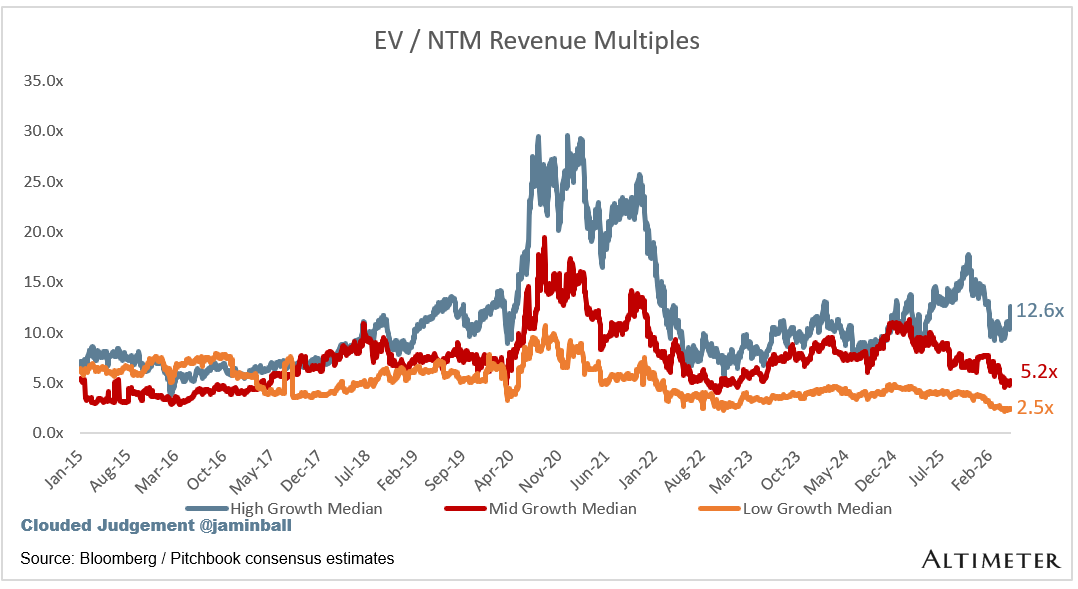
We are seeing this with many public names in the low growth bucket. There is a 5x difference between low growth and high growth company valuations…
CFOs should be thinking, at a minimum, about how to make their businesses AI-defensible. Think about how the core business may be susceptible to disruption, not just what’s right in front of you, but further down the road.
This focus on AI defensibility can be especially hard for public company CFOs, as it may require disrupting themselves in order to re-architect the business to be more defensible. — Joe Kauffman
Revenue growth continues to be the most important financial metric, but there is a lot more emphasis on durable revenue growth in 2026. “Can you keep strong growth rates for a long period of time?”
Whether you want to be acquired or IPO, nothing matters more than proving your revenue is durable in order to have a good valuation.
You Must “Accelerate”
AI can certainly help companies cut a lot of costs. And many CFOs will celebrate and brag about how much money they are saving by slashing software, headcount, etc.
But, if revenue growth falls off a cliff, do those savings matter? No…
When I refer to “accelerate” I am mostly talking about product. And the revenue will follow. The companies that don’t accelerate product in 2026 are going to get run over by the competition. Churn is going to skyrocket and acquisition costs are going to increase.
The most difficult challenge may be finding incremental businesses that are indexed to AI. That way, every time there’s a model improvement or other AI tailwind, you win too.— Joe Kauffman
Deel certainly seems to be accelerating product…And they are doing it in a way that benefits from their existing advantages (payroll system of record).
Released Akai (last week) - interconnected agents that learn your team’s workflows so they can automate as much as possible.
Acquired Sastrify (2 weeks ago) - software management and procurement
Release of token monitoring tool (2 weeks ago) - ties token usage from LLMs to employees to help understand ROI and employee performance
Deel app for ChatGPT (3 weeks ago) - Deel is now directly in ChatGPT so users can use AI to search and report directly from Deel
And there is probably even more cool stuff Deel is releasing, but the above are the things I am excited to try out.
Besides just their sheer speed of building, they are creating the right stuff that builds upon their moat/advantage - they are becoming the “operating system for work” (people and agents).
Getting Efficient to “Accelerate”
The second step is thinking about productivity gains from AI, and considering how to take those savings and reinvest them in products that drive top-line growth. — Joe Kauffman
Deel has acquired 14 companies since it started 7 years ago. And it continues to release products at a rapid clip. Deel (like everyone else) needs to use AI to become more efficient so they can reinvest some of those savings in the mission of “accelerating”.
Companies need to rebuild for efficiency. Some rebuilding should have likely happened regardless of all the AI progress (high-growth companies build bloat which also slows them down). AI is another strong reason to rethink how everything is done today.
Deel's new Ghostbuster role is one of my favorite org ideas of 2026.
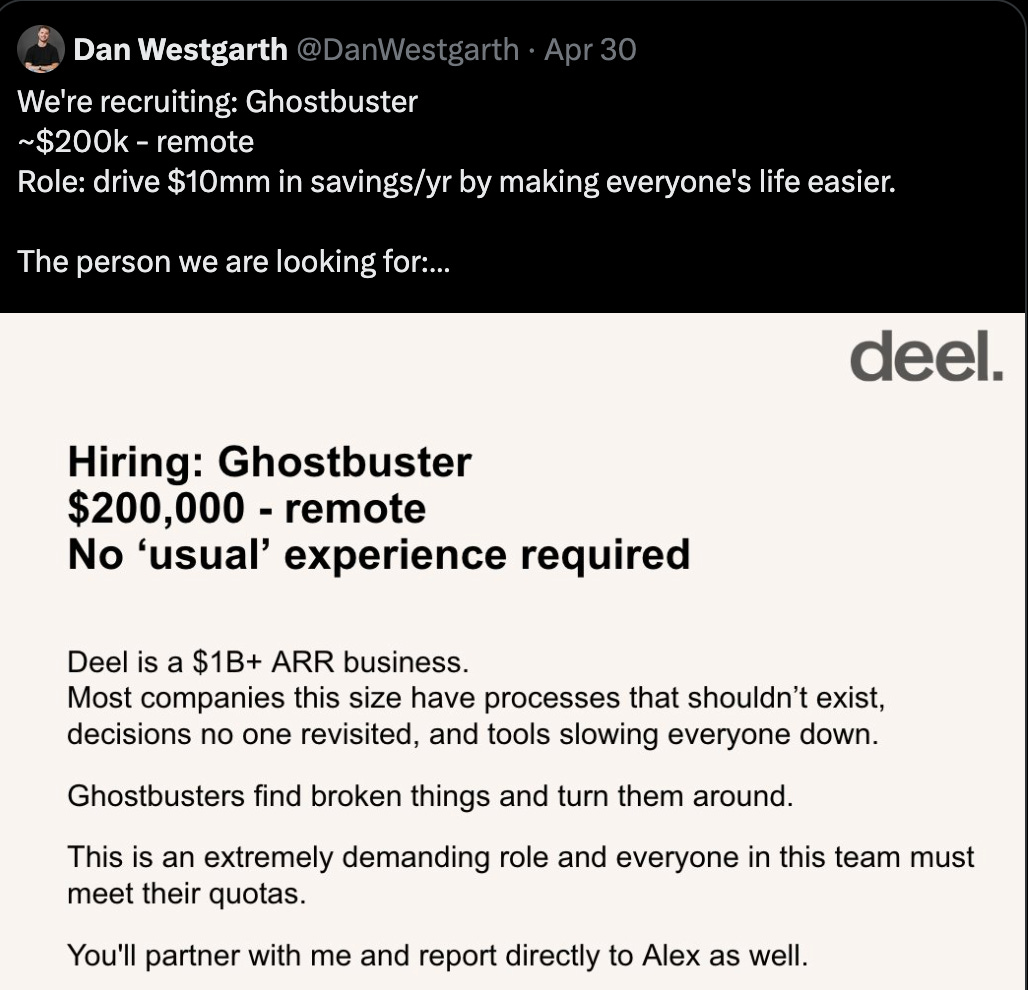
Deel describes the problem as follows:
Over time, multiple layers accumulate, some become outdated, some become friction, and eventually people start optimizing things that probably shouldn’t exist in the first place. — Joe Kauffman
Every single person reading the above that has worked at a growing company knows that this waste can become VERY significant. And it slows everything down. You can’t be slow in 2026.
It’s a perfect time for this type of role because not only can they find regular waste, but they can find ways to rebuild things from an AI-first perspective. $10M in savings as their goal seems aggressive, but likely doable. The role has a 50x ROI based on the salary target if that goal is met.
Companies need to throw away conventional wisdom around org design and span of control because they are less relevant in an AI-first world. Historical headcount benchmarks are pretty meaningless in 2026.
Getting to “Real” Profitability
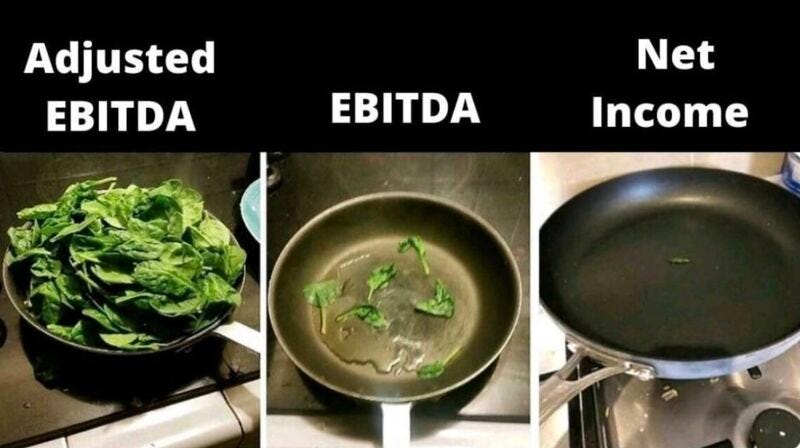
More and more investors will be looking at GAAP operating income and GAAP net income. CFOs would do well to look at the fully loaded cost per headcount (and fully loaded cost per agent) when considering ROI decisions for their human capital investments. — Joe Kauffman
Investors want to see that you can get to real profitability. And fast. As terminal values get called into question, investors are questioning mid to long-term profitability.
Not “adjusted EBITDA”….but real profitability.
Final Thoughts
Speed in capital allocation is really a consequence of the position you’ve built. The companies that will win are the ones that have built the muscle to move quickly and smartly. — Joe Kauffman
If you are competing with a company like Deel and you lack speed and/or direction, then you are going to get steamrolled.
Build with urgency. Build upon your strengths. Build things that will benefit from and become more valuable as the AI foundational models become more powerful (which they will).