Every board is asking how the company is leveraging AI. At first they just wanted to make sure the company was using AI, but now they want to know:
What are you doing that actually adds value for customers?
What are the best use cases for internal work?
Are you moving faster and/or more efficiently yet?
Brex’s The CFO Guide to AI Strategy is a great resource for CFOs to see where other finance teams are finding the best AI use cases right now. I have implemented most of this myself…
Founders: “I’m not thinking about an exit. We are focused on building a great business and good things will follow”.
Executives often say something like the above to get employees to stop asking when they will IPO or when there will be a liquidity event. Of course they have thought about exit paths…
And for many companies today, the potential acquisition offers are just gone…So it’s even more important to start early to improve your chances that M&A remains an option when you want/need it.
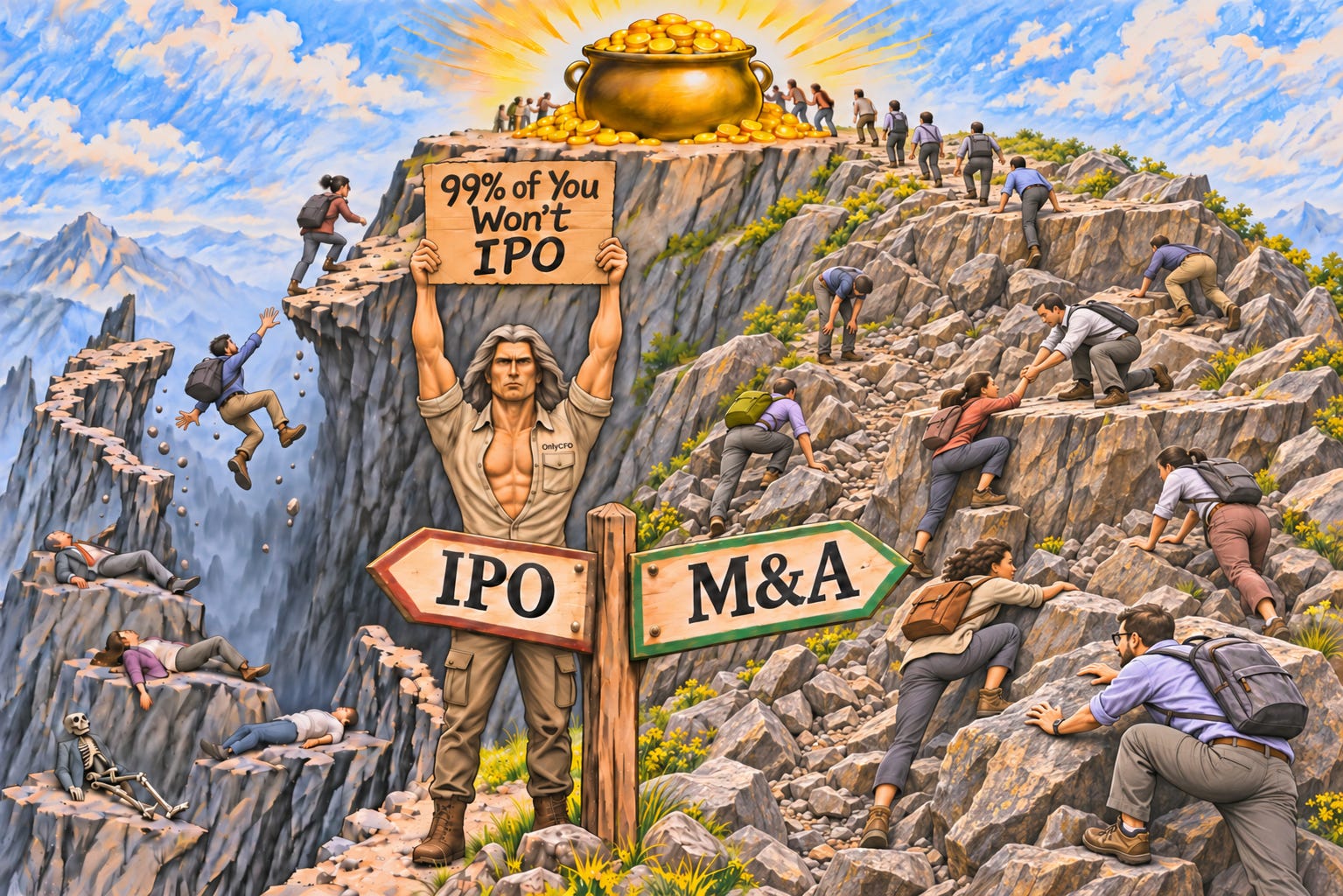
Most leaders are too focused on the IPO path and neglect the M&A option until it’s too late… ~99%+ of companies that have the privilege of an exit will do so via an acquisition (not IPO) so it’s borderline negligent to not understand M&A stuff.
This will be a 3-part series on M&A to share my experience navigating M&A:
Preparing for M&A — 10 things to know and do today. (Today’s post!)
The M&A Process — Deciding to sell, who’s involved, timeline of events, and what to negotiate
Diligence & Closing — What buyers dig into, why deals fall apart, and the process of getting from signed LOI to closing.
Here is what you need to know (and do) so that M&A is a good exit option 👇
Types of Acquisitions
First let’s start with the types of acquisitions:
Strategic - Operating company buys you (Salesforce, Databricks, etc)
Sponsor / Private Equity - PE buys you directly (Thoma Bravo, Vista, Francisco Partners, etc)
91%+ of acquisitions this year were led by strategics, which includes PE and VC backed companies.
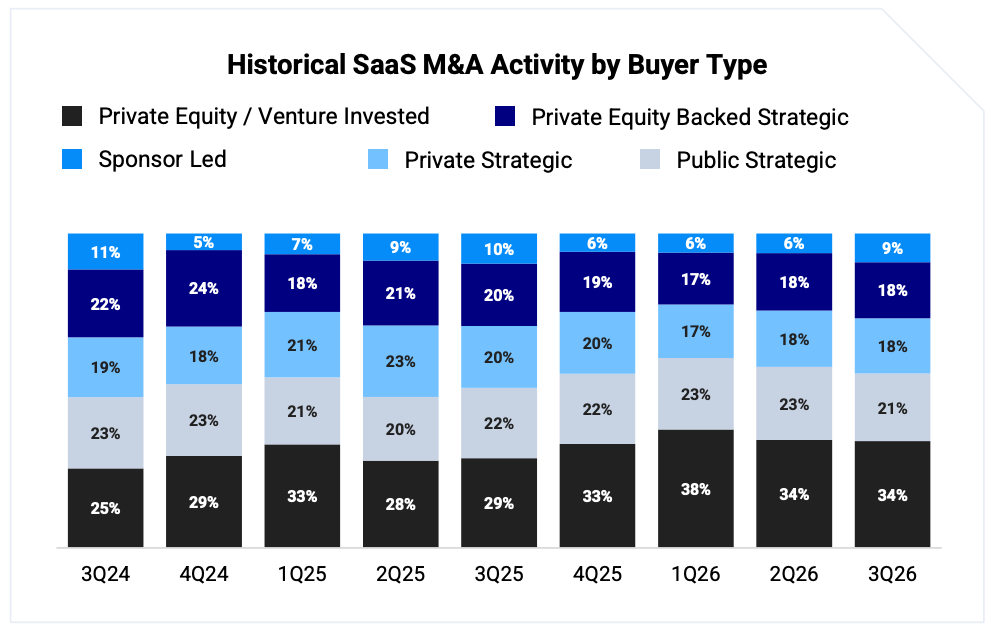
If you are going to get acquired (most of you are), then your goal should be to sell to a strategic. Strategics almost always pay higher valuation premiums.
Bluntly, most strategics don’t have the valuation rigor/limits that PE does. Also, strategics buy with the equation of 1+1=3 so they can pay more than a financial buyer. While PE is acquiring with the goal of selling the company again for a 3x+ return in 3-5 years. And a public strategic (or even high-growth VC-backed) typically can pay a lot more than a PE-backed strategic.
But not all strategic acquisitions are created equal…Here’s what the potential acquirer is buying in a strategic acquisition (ordered from least to most valuable):
Team
Tech
A business (team + tech + traction)
⏩ Goal: In M&A, you want your business to be acquired by a strategic
10 Lessons About Strategic M&A
1. Build relationships with the top 3-4 potential acquirers
Figure out the likely acquirers (the non-direct competitors at least) and build relationships with them. The vast majority (like 90%+) of strategic acquisitions happen because of prior relationships. Most common ones I see:
Strategic invested in a fundraising round
Sales partnership
Friends/network with someone powerful at the buyer
Board member or investor connections
The reason these relationships matter is because the potential acquirer will likely come to you first (before any of your competitors) when they decide they want to acquire in your space.
Brex (coincidentally today’s sponsor :) was acquired earlier this year by Capital One in the largest bank-fintech deal ever for $5.15B. Erica Dorfman, Brex CFO, told me the following:
Know your market. Build relationships with potential strategic partners before there’s a deal on the table. Familiarity compresses the trust-building that usually eats months. Part of why Brex’s acquisition (the largest bank–fintech deal ever) moved in 40 days is that the foundation already existed.
Below is my experience with most strategic M&A. It’s nice to be first on their list to call…

2. Understand who the actual buyer is
Hint: It’s not the corp dev guy cold emailing the CEO asking to chat and learn about your business.
I am not saying never to talk to the corp dev folks at potential acquirers, but they can waste a glorious amount of your time and distract you from the business. Their job is to talk to lots of companies and gather information. Unless you have decided that you want to sell right now, it’s ok to kindly turn down the opportunity to meet with them if you want. If you do talk to them…make sure the actual person who would buy (see below) joins soon in the conversations.
Startups are sold to [powerful] individuals. These are the people you want to build relationships with early (before you want to sell). The CEO, senior product leader, GM of a division, etc. These are the people who decide that their company needs to acquire and they bet their career on the acquisition.
Know who to build relationships with and when…
3. What pushes individuals to acquire?
Good acquisitions happen when someone decides there is a strategic reason to buy you. It’s not because the seller decides to sell (price is almost never good when the seller is pushing the sale)
High valuation premium deals come when it’s the buyer’s idea (not yours):
CEO finds the space interesting
Product leader sees a gap in product roadmap
Missed sales numbers and need something to help
GM of a division needs a big bet growth driver
CRO is losing deals to a competitor that includes seller’s product in a bundle. Need to move fast
And who are they going to call once they decide they should buy? Hopefully you!
4. Regularly review your situation
Many 1st time founders are afraid to talk about exit paths with their board, but you should (at least after you have some scale).
Regularly (maybe once every 12-18 months, depending on your situation) review your strategic situation with the board and evaluate alternatives:
What does the market look like?
Who are potential acquirers? What is our relationship with them?
What are the major risks and opportunities of staying on the independent path?
Should we change anything with our strategy?
5. Don’t let potential M&A kill your company
If acquisition talks start, don’t let them derail your company.
Minimize who knows about the process
Don’t waste too much time with corp dev folks. Make sure the right person at the company is included in calls early on.
The deal isn’t done until the money hits your bank account. Deals fall apart all the time.
Keep running the business like the deal won’t close (it might not!)
Erica, Brex CFO, said the following:
When were agreed on the highest level frameworks, we immediately started on diligence. We kept the circle very small both to avoid disruption to our business during the process and to ensure we minimized the sharing of material information ahead of an announcement.
Side note - There are some pretty easy tells for folks not in the know about the acquisition. Such as:
Lots of urgent requests (top 20 customer and vendor report, slices of data you haven’t prepared before, etc)
Exec team is having a lot more meetings than usual
Questions on accounting details or forecasts that no one has ever dug into before
Major decisions (software purchases, major hiring, strategy changes) get stalled.
An executive telling you “The board/investors want this additional data” - I regularly use this :). But if this were true…it’s rarely super urgent.
Can be hard for many folks to know if it’s VC diligence for a new fundraising round or M&A, but M&A diligence almost always goes deeper than your typical VC diligence.
6. Should you hire a banker?
Hiring a banker happens once you have decided that selling is probably the right move:
You kick off a banker-led process to sell the company to create urgency, surface potential buyers, and establish price. These are usually not the ideal outcomes since you aren’t being pursued.
You have acquisition interest and then hire a banker to help with offers and price when you are seriously considering selling. This is the ideal scenario because these are almost always better valuations.
The below shows a good starting point of what to expect in terms of banker fees, but there can still be some pretty big variations depending on things like expected deal size, risk with closing the deal, M&A advisor tier/reputation and process type (from above two paths)
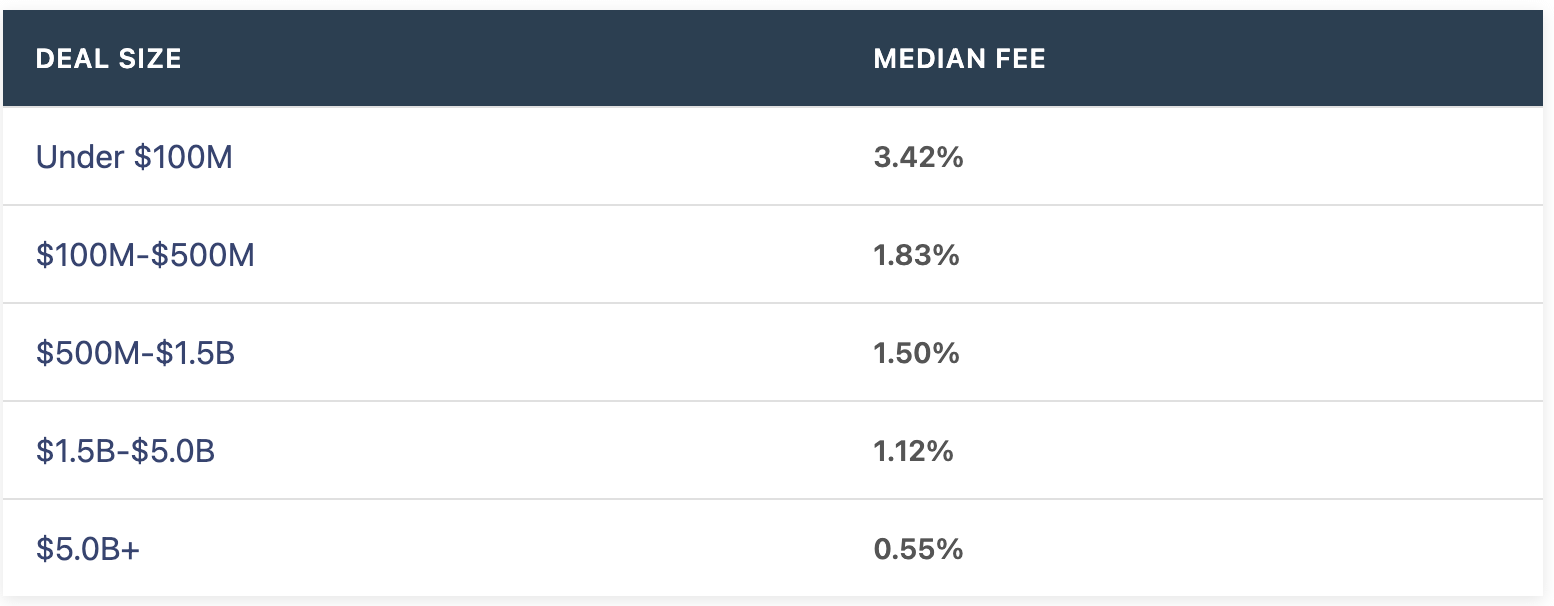
Do you have to hire a banker? Jeron (founder of Spiff) said they didn’t use a banker when they sold to Salesforce for $419M. They talked to a few bankers but ultimately didn’t use one. It was easier for them since Salesforce pursued Spiff and their internal M&A experience. Assuming the price would have been with or without bankers, Spiff probably saved ~$6M+. However, for most deals this size or larger I would generally recommend using a banker.
One key difference with PE though is that you almost always want to hire a banker if you are selling to PE. Otherwise they will eat you alive…
7. Fix issues that can kill a deal (financial, security, IP, etc)
Acquirer needs to trust you. If financials are bad then some of that trust is lost. Most of the time though they know your financials likely aren’t perfect or done the same way as theirs. But if it feels like you lied to them…that can kill a deal.
Major security issues can be dealbreakers though. If there are major security concerns that feel too broken then acquirers will just walk away. It’s not worth the risk.
We have 14 functions that we work with on all of our diligence processes, and security is the one function that can hold up the red flag and say, 'I'm killing this deal’. — John Somorjai, President of Salesforce Ventures
Make sure all this stuff is cleaned up ahead of time.
8. M&A interest comes and goes
If you get a strong acquisition offer today, those offers may completely vanish in 12-18 months (or less!). Ask all the hot companies from 2021 who both missed their time to IPO and their chance to sell at a good price…
Priorities change, your growth rate may slow, technology shifts, etc.
I talked to the CEO of a company that got a massive offer from a strategic but turned it down in favor of a large funding round at an even higher valuation. The company was super hot. But then…things just came to a screeching halt. They sold several years later for 20% of the strategic’s original offer (with a lot more dilution and a much higher pref stack to clear). Very few made any money at all…
How does M&A interest change so fast? In this case the business slowed down. It’s easy to go from hot to not. It’s happened to many in the SaaS to AI shift. But also, priorities change. Remember, companies are sold to people. And when their priorities change there may not be any offers on the table later.
Best time to sell? When you are hot and buyers want you obviously…Currently exceeding plan (and will exceed plan through close) is also important.
Make sure you are comfortable continuing to run independently forever as the offers may not come again.
9. Know how fundraising impacts exit options
Once a company has a valuation of a few billion or more, the buyer universe becomes incredibly small. And even those that can buy will have a harder time justifying the price and will spend more time in diligence.
VCs will say that AI exit outcomes can be a lot bigger today so pouring more money into the hottest companies makes sense. Sure…it makes sense for them because they are putting option bets on companies to achieve their power law returns. And they have downside protection on the other 99% of companies that won’t be home runs because they have preferred shares.
What makes sense for VCs may not make sense for you…
Raising money isn’t bad, but understand how it impacts your M&A options (your likely exit outcome).
10. Don’t run out of cash
You are working on the buyer’s timeline. There are things you can/should do to help push them to consider acquiring you (like creating some FOMO), but it’s still on their timeline.
And diligence can take a long time…
The less runway you have, the more power the buyer has. And the worse price you will likely get.
Start prep early so it’s an option when you need/want it.
Final Thoughts
Build for independence and an eventual IPO while creating the option to be acquired at an attractive valuation if you need it at some point.
Building a great company is the hard part. And where almost all your time should be spent. But…if you carve out a small amount of time to do the things above, then not only will you significantly increase your odds of an exit (since ~99%+ of you will exit via acquisition), but you will very likely get a higher price as well.
Seems like a smart bet…
Footnotes:
Talk to my friends at Brex for a true AI-native spend platform
Email onlycfo@onlycfo.io for sponsorship opportunities
Subscribe and share the OnlyCFO newsletter with your teams
*Nothing in this article constitutes legal, tax, or investment advice
Interesting Things I Read
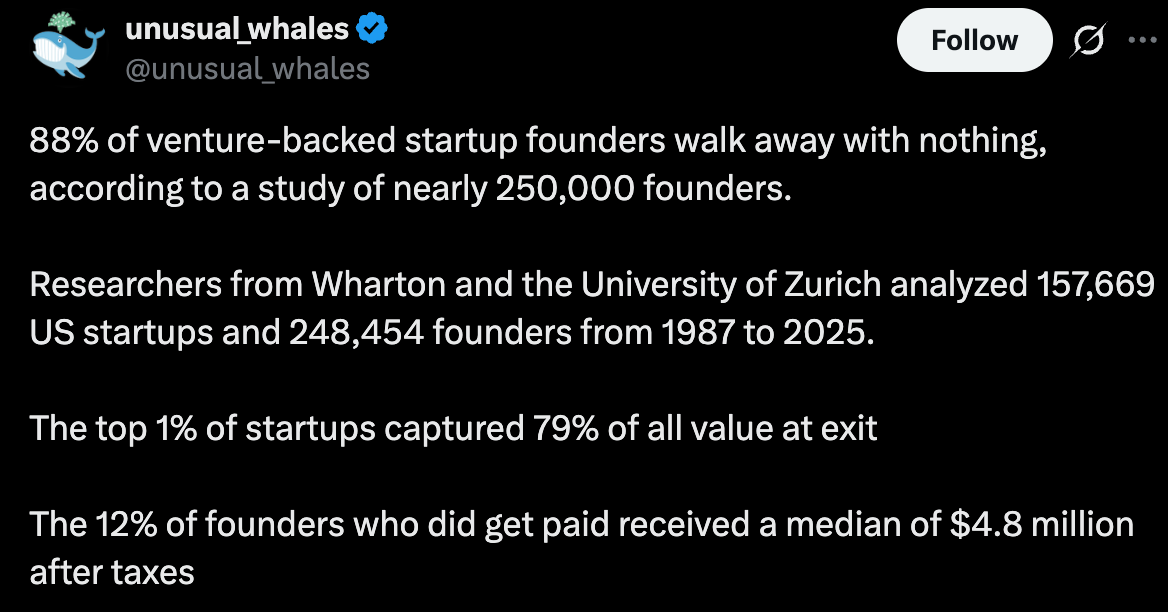
Data on VC-backed exits. Nothing really new here. Most companies fail…but I bet the number of founders that walked away with nothing would be a little bit smaller if they raised less money. On the flip side though, the massive outcomes may not have been as big if they didn’t raise as much as they did.
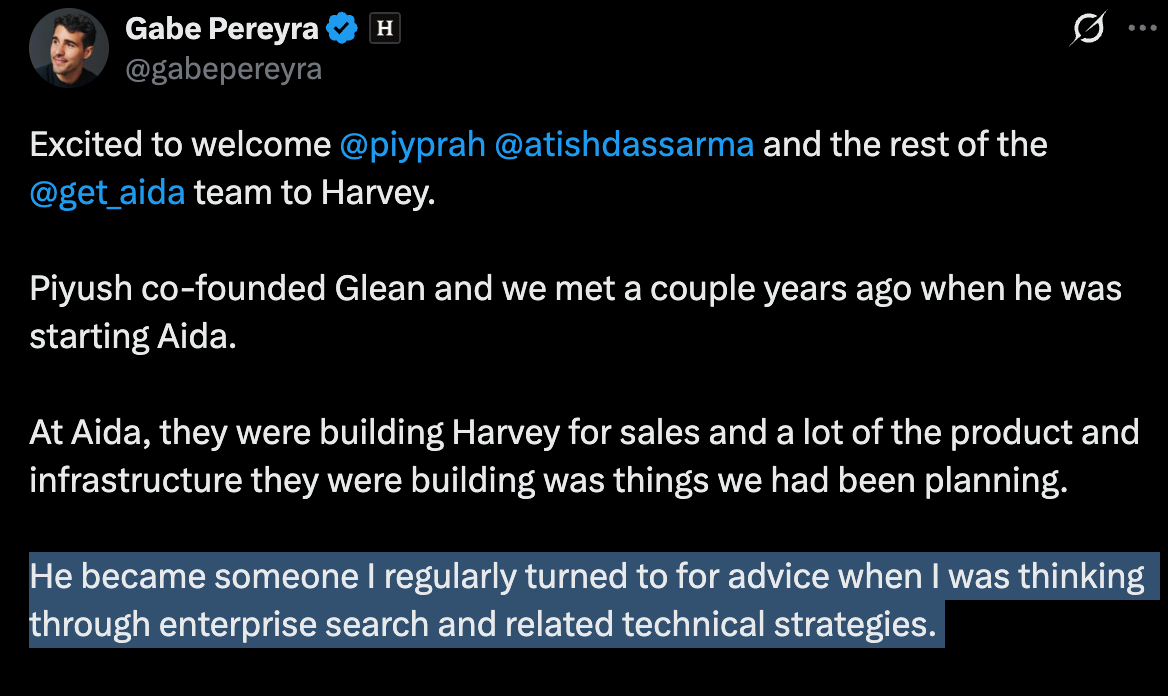
Harvey just announced an acquisition and like most M&A, the relationship started before Harvey decided to acquire