
Brought to you by…Deel

Payroll is entering a new era with AI-driven compliance, real-time visibility, and higher expectations from the board.
Deel’s Payroll Strategy Toolkit gives finance leaders a step-by-step roadmap to modernize payroll, reduce manual risk, and build a scalable strategy with confidence.
Suing Your Board of Directors
Common shareholders (current and former employees) are suing their company’s board because of a pushed fire sale that allegedly undervalued the company and screwed common stockholders.
The accusation?
Six out of the seven board members had conflicts of interest and did not act in the best interests of the common stockholders (which is required by law). As such, the board members breached their fiduciary duties and are therefore liable to the common stockholders.
How did they breach their fiduciary duties?
Board members can be conflicted in several distinct ways. Below are the most common groups:
1. The VC Directors:
VCs have a “dual fiduciary” problem. They must wear two hats: 1) GPs of their VC firm (need to maximize returns for their LPs) and 2) Directors of the company (need to maximize the value of common stockholders).
In this example, the company was considered a zombiecorn. Growth was too slow and the VCs stopped believing in it. In 2026, you are either a hot, fast-growing AI company or you are dead. There is little in between. The VC Directors wanted liquidity and to move on from a company they stopped believing in. They just wanted to focus on AI stuff so they pushed a fire sale.
After the first potential acquirer expressed interest, the VC Directors pushed hard for board approval to move forward with the sale. The acquisition price was not great. A fraction of what the company was last valued at, but the VCs (with their preferred shares) would get 90% of their money back while common shareholders got nothing.
See the problem?
The lawsuit alleges that the VC Directors created a fire sale so they could quickly be done with the company. The accusation was that a more thoughtful, planned sale would have resulted in a much more favorable outcome for everyone (particularly common stockholders) but that the VC directors didn’t care given their contractual preferred treatment.
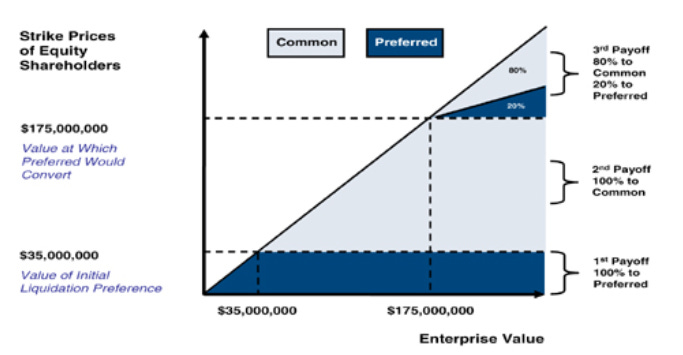
Preferred vs Common Exit Waterfall
In the example below, anything between a $35M and $175M acquisition price doesn’t impact the VCs financially. They get the same amount either way in an exit. But common stockholders start to benefit after $35M. If the VC Director isn’t fully wearing their fiduciary hat they might see a $35M acquisition offer and be quick to accept it because they know there is no way the company is worth more than $175M so they would rather take the guarantee now.
2. CEO and CFO May Not Be Innocent Either
In theory, these individuals represent the interests of common stockholders because that is the equity that they have.
But in this case, both the CEO and CFO also had a conflict. The CEO was tired of the grind and was supportive of the fast sale, with contingencies. He had close previous relationships with the PE firm that they sold to and knew they would give him a very large joining bonus and equity in the new entity. The CFO got a similar deal. So while their equity would be worth nothing, they were guaranteed a large cash bonus because of the transaction.
3. Independent Director
Even the “Independent” Director was conflicted…He was referred by one of the VCs. He sat on two other boards that were the VC’s portfolio companies and he was an LP in one of their funds that invested in the company.
I wonder how he voted?….
There are lots of Independent Directors who are not so “independent”.
So What Happened?
The above scenario came from the facts of two separate lawsuits for a breach of fiduciary duties:
Mindbody (public software company): They were public and taken private by Vista (PE firm). Mindbody’s CEO favored Vista and wanted to exit to them so he deliberately suppressed the stock price to make it more attractive and fed Vista insider info about a formal sales process before it began. He wanted liquidity and thought Vista was the best firm to give him more upside post-merger. He was ordered to pay $48M in damages for a breach of fiduciary duties…
Trados (VC-backed software company): Private company that sold for $60M where preferred stockholders received $52M, management received $8M through a retention incentive plan, and common stockholders got nothing. 6 of 7 Directors were conflicted and were found to not have considered the interests of common stockholders and breached their fiduciary duties. Despite a failure in fiduciary duties, they escaped liability because it was determined that common stock had no value before the merger (so receiving zero was fair).
Understanding Your Fiduciary Duties
Many board members and company executives don’t understand their fiduciary duties. There is no required training once you become a board member that tells you what to do (or not to do). A lot of it is common sense. Don’t do unethical stuff… But some of it is not very intuitive.
Who are the fiduciaries?
All board members and the CFO. Even if the CFO isn’t a board member they are a fiduciary.
What does it mean to be a fiduciary?
A fiduciary is legally required to put someone else’s interests ahead of their own.
The three main “fiduciary duties”:
Duty of Loyalty: Don’t use your position for personal gain. No self-dealing. No hiding conflicts. If you’re on both sides of a transaction, the board needs to know.
Duty of Care: Make informed decisions. Read the materials. Ask the hard questions. “I didn’t know” is not a defense if you didn’t try to know.
Duty of Good Faith: Act honestly, don’t disregard obligations, don’t intentionally violate the law, etc.
Who are fiduciaries supposed to protect?
This can be the tricky part, especially when so many board members can be conflicted.
Fiduciary duties run to the common stockholders (as the residual equity claimants), not to preferred stockholders. Preferred stockholder protections come from contract (their stock purchase agreements), not fiduciary duty.
Lessons for Fiduciaries:
You must explore all possible trajectories the company could travel
This is essential to fulfilling Director fiduciary duties when evaluating strategic options (such as M&A), especially when it’s not a great price.
What is the potential company value under each path?
What is the probability of each outcome?
I talked to a public company CEO that was taken private and he said the work they had to do around this was exhausting. They knew that once a deal was announced, the lawsuit trolls would appear because it inevitably wouldn’t be good enough for someone (even though the price seemed great). They needed to fully consider every possible outcome and document everything.
Most VC-backed boards are conflicted
Just because the entire board approves something doesn’t mean they have met their fiduciary duties because most boards (particularly VC-backed boards) are conflicted:
VC Directors are always conflicted as dual fiduciaries.
Management Directors may also be conflicted if they receive material benefits not available to the rest of the common stockholders in a transaction.
Independent Directors may be conflicted based on all their relationships
Get non-conflicted party consensus
The key is that, in an interested party transaction, you need to get a majority of the people who aren’t getting any ‘special benefits’ to approve the deal. If you can’t, then you’re asking for legal pain.
Boards that document their deliberations, get independent fairness opinions on M&A, and create special committees can often escape liability even in messy transactions.
The Rule of Common Maximization
Directors owe their primary duty to common stockholders when the interests of the preferred and common come into conflict.
The logic is that common stockholders are the "residual claimants". They're the ones with locked-in, illiquid equity who can't exit. Preferred stockholders (VCs) have contractual protections (liquidation preferences, anti-dilution rights, etc) that are negotiated and enforceable regardless of what the board does. Common stockholders have none of that. All they have is the board's fiduciary obligation to them.
Directors often must act against their own self-interests.
They must do the right thing for the company, its shareholders, and its stakeholders. There is no wiggle room on this rule. For Directors, this is the golden rule.
Being a fiduciary carries significant potential personal liability
The Mindbody CEO had to personally pay $48M in damages. Board members and CFOs can face personal liability, not just company liability.
Make sure the company has good D&O insurance. While it won’t cover fraud or intentional misconduct (like in Mindbody’s case), it will cover honest mistakes.
Fiduciary Duty Lawsuits are Coming
When companies are highly successful and have good exits, then everyone celebrates. It’s easy for Directors to act in the best interest of everyone because it’s good for them too.
But times are tough for many in 2026…I know several companies being pushed to explore M&A today by their VCs. Most of these companies are likely worth less than (or maybe just above) the pref stack so common would get nothing. And that adds a lot of risk for lawsuits and being found breaching fiduciary duties.
Directors must prioritize their fiduciary hat and make sure they are protecting the interests of the common stockholders. And take these responsibilities seriously…
Footnotes:
Download this guide and up-level your payroll for faster, more compliant processing and building a scalable strategy in the age of AI
Reply to this email if you want to sponsor OnlyCFO
*nothing in this post should be considered investment, tax, or legal advice. Do your own diligence.
📚 This Week’s Interesting Things:
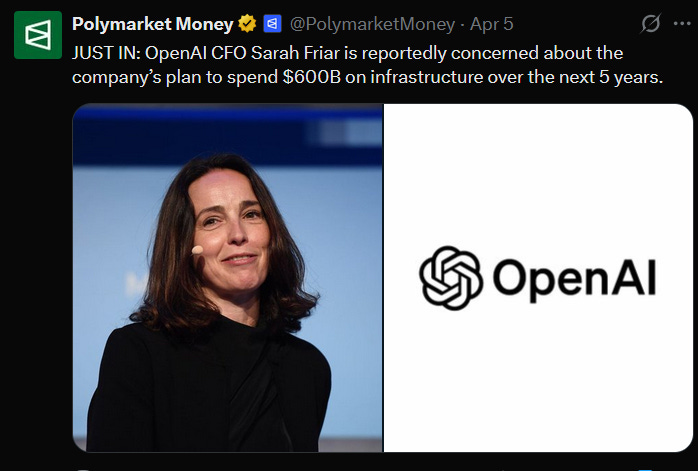
OpenAI CFO’s Fiduciary Duty
OpenAI CFO has reportedly expressed concerns about their massive spending and the IPO timeline being discussed. She is trying to keep her fiduciary duties by communicating concerns about the CEO’s targets. Good for her. Many CFOs just shut up and nod to whatever the CEO says.
But apparently Sam Altman (OpenAI CEO) has been excluding her from financial plan conversations, like a recent meeting with top investors about server spend plans. If true, that would seem pretty bad governance…
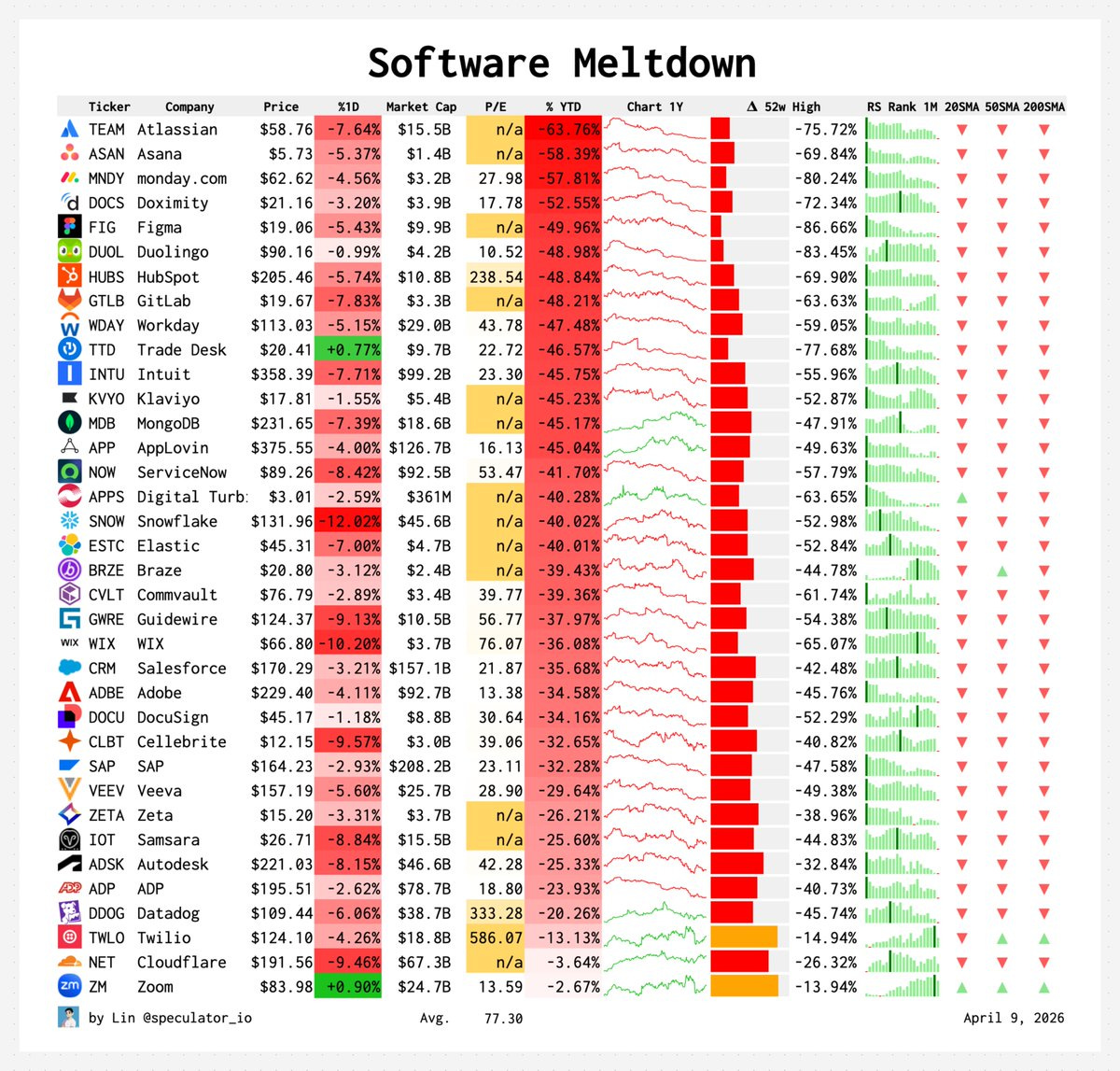
Software’s Continued Meltdown
When the stock market is down, SaaS stocks are way down. When the stock market is up, SaaS stocks are still down. Whether SaaS is dead or not….SaaS investors are.
When will SaaS catch a break?!?
All the great analysis and advice in this post notwithstanding… there is at least some poetic justice in the fact that the Mindbody transaction — software to manage gyms and yoga studios — occurred right before the COVID lockdown! 😉
Boards don’t break when things are going well.
They break when outcomes stop being shared.
That’s when incentives quietly diverge—and decisions start looking rational to insiders and unfair to everyone else.