
Sponsor: Redefine planning with Abacum’s AI-native FP&A platform.

Finance teams know the pain: annual planning and budgeting processes break as the business grows. Abacum’s 2026 Finance Guide distills decades of experience from the trenches into tactical frameworks for scaling companies.
Layoffs Hit 2nd Highest Level in 16 Years
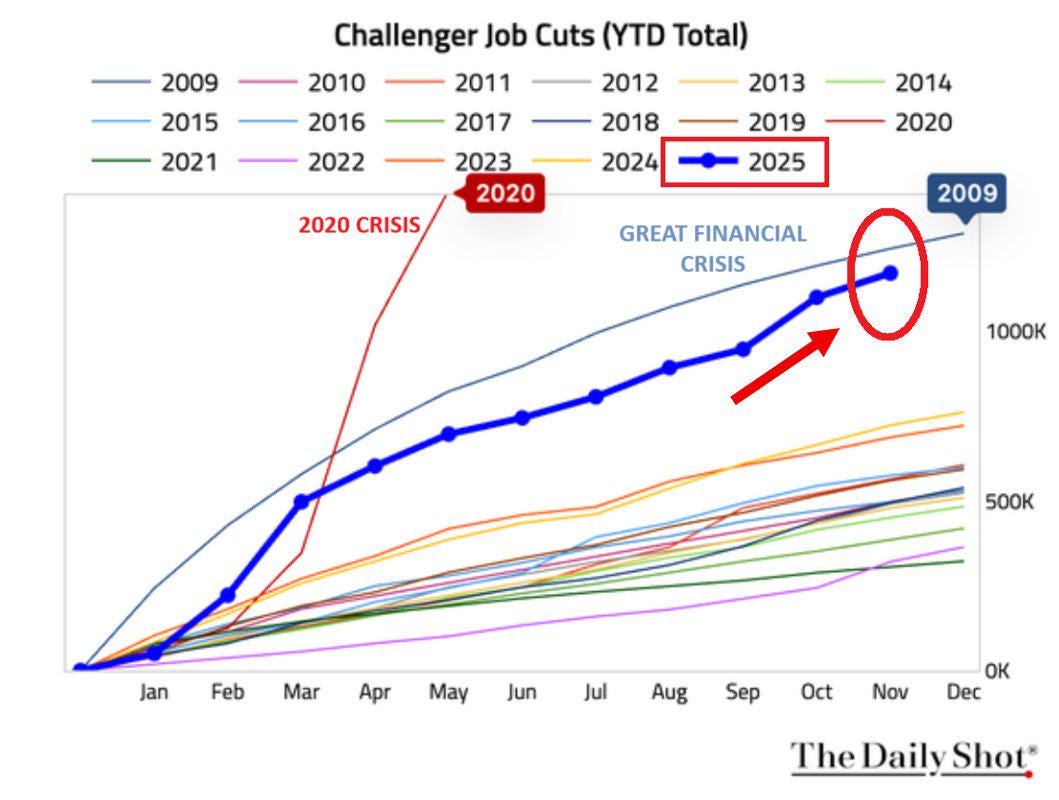
U.S. layoffs have reached 1.2M as of November, which is up 54% YoY.
And it’s the highest level since 2020 (when 2.3M layoffs were performed) and it’s on track to surpass the layoffs during the Great Recession in 2009.
2009: 1.24M (Great Recession)
2020: 2.3M (Covid layoffs)
2024: 0.76M
2025 (Jan–Nov): 1,170,000+ → on pace to exceed the 2009 record
Yes, I am aware that the U.S. population has grown since 2009. But even with ~13% growth in population since 2009 and with ~0.3M layoffs coming from the government, this is still a lot of layoffs and people looking for jobs.
While there is still one more month in 2025, tech company layoffs appear to be decreasing/flat, according to layoffs.fyi in the chart below.
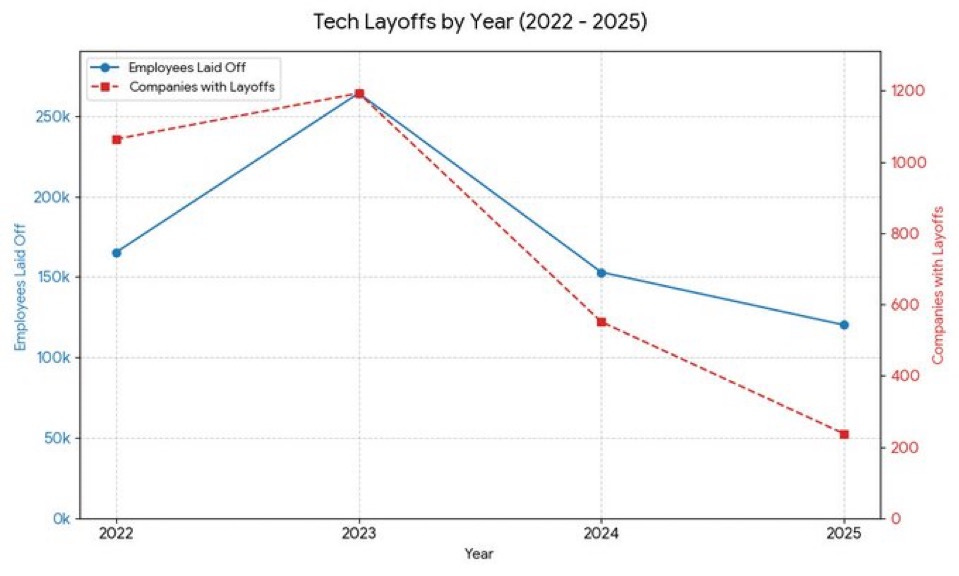
It’s worth noting that the layoffs are coming from fewer companies than before. In other words, a few large tech companies are doing some massive layoffs.
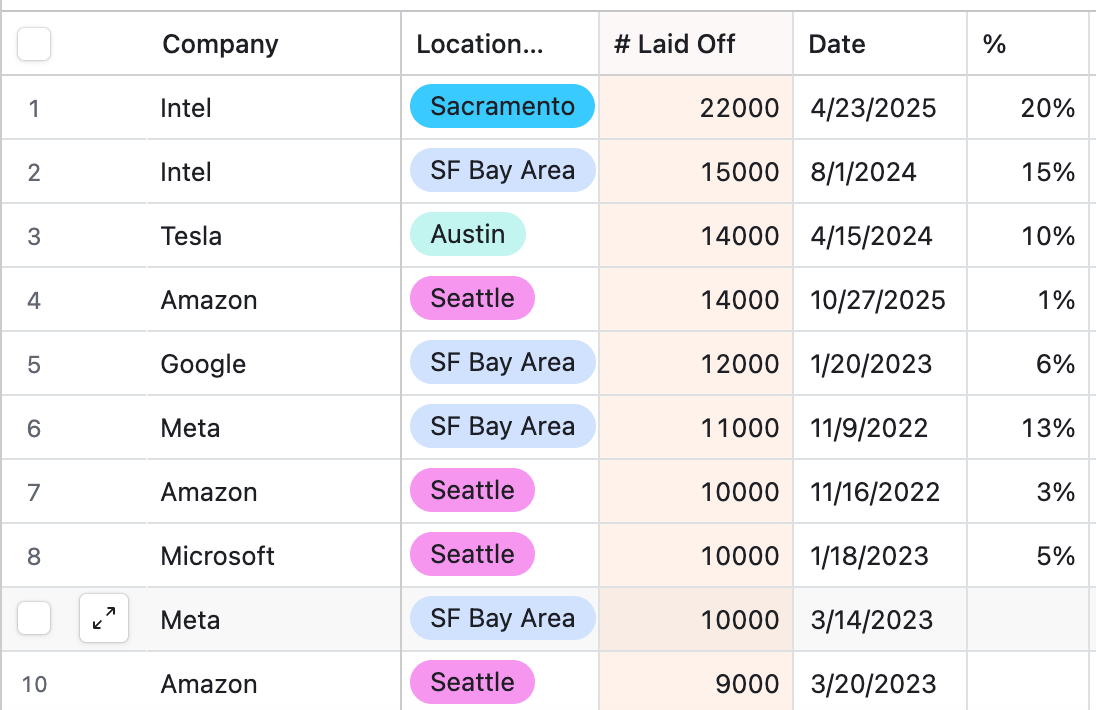
There are a couple of reasons why tech may have had less layoffs than the broader market:
There were a lot of layoffs earlier in 2022 and 2023, when tech was hit hard
Tech is currently in an AI boom so after getting lean they are now focused on capturing the AI opportunity
Annual Planning for Layoffs
However, don’t expect the tech job market to improve in 2026.
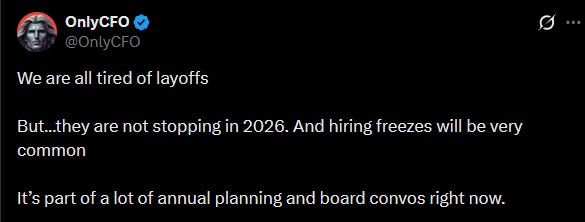
Companies are wrapping up their annual plans for 2026. And I can promise you that many boards are still pushing companies to be more efficient and burn less cash (especially the non-AI hyper growth companies).
There are three primary levers with people costs:
Hiring freeze of new hires
Limited backfills from employee attrition
Layoffs
People costs account for 70% - 80% of total costs for most tech companies. Below is the average cost per employee (FTE) broken out by department (tech folks are well paid).
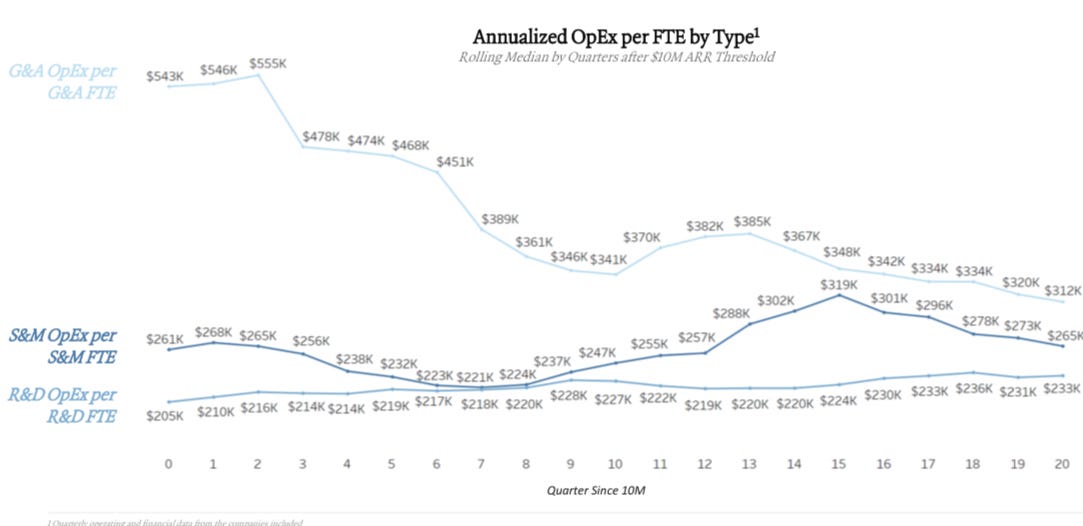
With so much of total costs directly tied to people, if a software company needs to reduce costs by any significant amount then it almost always has to cut people.
Why Layoffs Happen?
Layoffs almost always happen to manage costs due to slower than expected revenue growth. When expectations change (especially when they change fast) that’s when layoffs are on the table.
Sometimes layoffs happen because of unlocked efficiency gains (i.e. generative AI) so the team size required is smaller. But…if revenue is growing at a decent rate then a simple hiring freeze will often do the trick to get the balance right fairly quickly.
Signs of a layoff
Missing sales targets and revising down forecasts. In a recurring revenue business, unless a company grossly overhired then they should be able to freeze hiring and let revenue catch up. But if revenue targets are missed and forecasted to be low then it may take too long to get to appropriate spend levels so a layoff is needed. This is the most important indicator.
Hiring and spend freezes. Layoffs should be a last resort. Management will typically freeze hiring/spend and take time to investigate where else money can be saved first. They want to do their diligence to make sure they can avoid laying off as many people as possible.
Unit economics are bad. If sales results/targets are being missed and the company’s unit economics are bad then layoffs are definitely being considered.
Projects put on hold. Similar to spend freezes, but when management plans on doing a large layoff they don’t want to commit to new projects or continue ones that won’t be finished. Things are paused or put on hold.
Management stops providing direction and guidance. Performing any sizable layoff is extremely time-consuming and draining for management. They also don’t want to make any big decisions when they know a layoff is coming and they don’t know how it will impact the business.
Increased executive turnover. Most execs have the experience to know when the ship is starting to sink or very rocky times are ahead. They are also part of the early layoff discussions so they know it is coming and may want to jump first.
Change in leadership behavior and working relationship. Convos become less comfortable, they micromanage more, want to know the details of what you are working on and how to run your processes. This is true for the leaders in the know about the layoff, but would also be true for a manager of an employee who is going to be part of a normal performance-based termination
There might be other signs but these are some of the most important. Each individual one may mean nothing, but when there are several of these signs then there is a strong possibility that layoffs are being considered.
Final Thoughts
Employees: Obviously, work hard and do your best work to better your chances to survive layoffs, but do not forget to network. Every role I open up has hundreds of applicants within hours/days. Who do I always talk to (even if they are not the top candidate)? Referrals from people I know.
Employers: Obviously, be kind, honest, have a good process, etc. if you are doing layoffs. But also…measure twice and cut once. You likely should do a bit more than you think. Make sure to cut enough in a layoff so the employees who stay are still happy. Make sure there is enough budget for promotions, raises, bonuses, etc for all that stay. Keep the team that stays happy.
Footnotes:
Download this finance guide to hear from experienced CFOs on how they manage annual planning and budgeting.
Want to sponsor OnlyCFO and reach 35,000 finance and other tech leaders? Email onlycfo@onlycfo.io
How many of these layoffs are being backfilled with cheap labor through H1B and outsourcing? The big tech companies have announced $100 billion of investments in India. American workers need to be protected.