

Every board is asking how the company is leveraging AI. At first they just wanted to make sure the company was using AI, but now they want to know:
What are you doing that actually adds value for customers?
What are the best use cases for internal work?
Are you moving faster and/or more efficiently yet?
Brex’s The CFO Guide to AI Strategy is a great resource for CFOs to see where other finance teams are finding the best AI use cases right now. I have implemented most of this myself…
ICONIQ’s Pacesetter Index Is Wild…
I have never seen higher revenue growth expectations than we have today.
ICONIQ released a benchmark report this week that showcases their “Pacesetter Index”, which is their top-quartile AI-native companies. If you want to be humbled about your metrics, then check out the below table…
A lot of VCs have companies that fit the “Pacesetter” profile in their portfolio right now, so it has shifted their expectations.
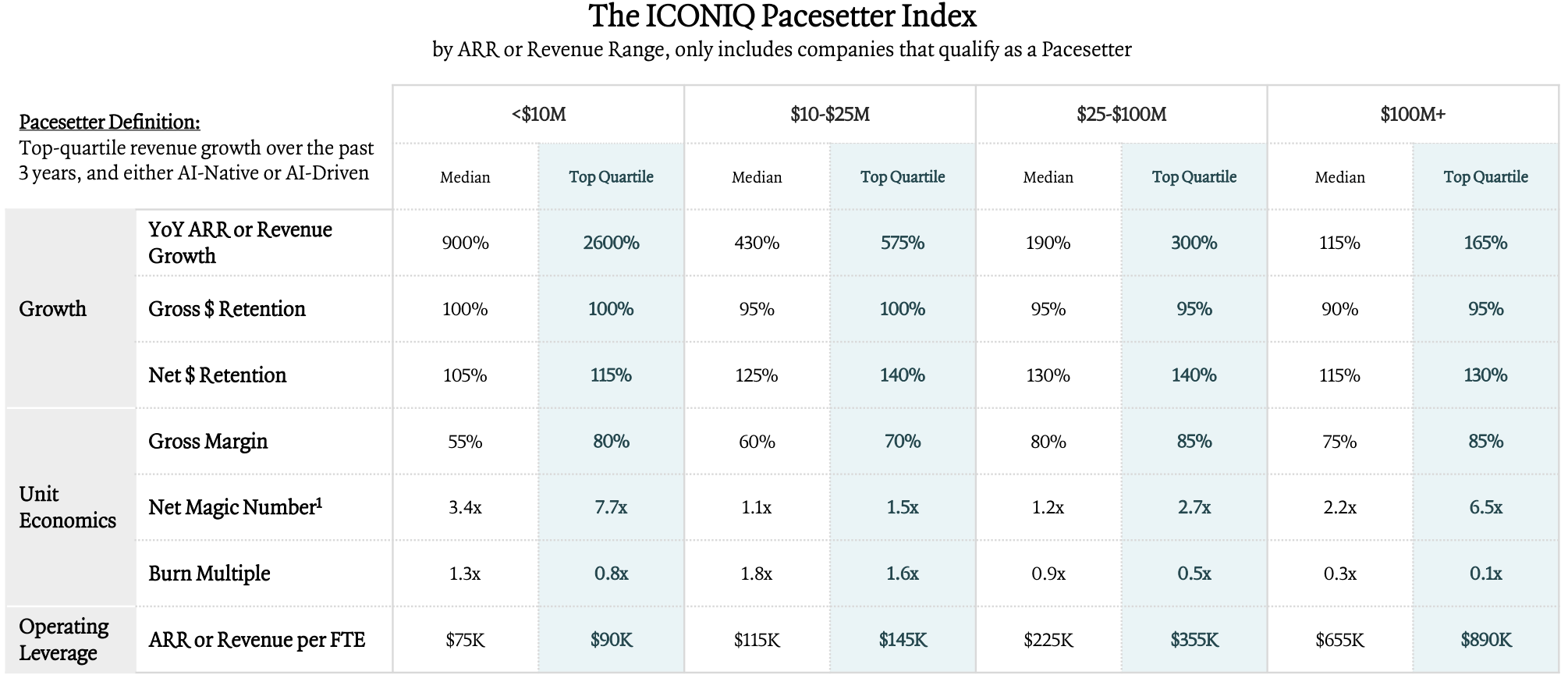
Report Caveat: If you just skim the report you will read “top-quartile” and think these are the metrics of the top 25% of companies. “Dang! We must be a bottom-quartile company because these metrics are crazy!”
Not really…Understanding firmographics and the benchmark context is important:
The Pacesetter Index is primarily ICONIQ portfolio companies. ICONIQ is one of the best VC firms so they get into the very hottest companies
The companies in the Pacesetter Index are hand-selected as “AI-Native”. These types of companies are generally growing the most right now
So when you read “top-quartile” in this report, you should think top-decile (or probably even higher) given it’s the top-quartile of AI winners at one of the best VC firms.
But it’s still valuable to see the metrics of these top companies because investors are comparing you to them.
VC: Grow Faster or You're Dead
Several VCs have gotten hate for saying something like Hemant Taneja (CEO of General Catalyst) - the gold standard of revenue growth from a few years ago (T2D3) isn’t good enough anymore.

Lots of people were quick to argue that T2D3 is still incredible and VCs are out of touch. “You can build a huge business with T2D3! The best software companies have been doing it for the past decade.”
Look…I get it, but Hemant is not wrong. His point is that venture dollars get allocated on a relative basis. So when the top companies are materially better than T2D3, then VC dollars will go to them.
T2D3 might become relevant again if these hot AI companies come back to earth after the initial rocket ship growth, but for now…VCs are expecting faster growth.
And that is what ICONIQ’s Pacesetter Index is showing us. These aren’t the only companies getting funded today, but the expectation is that something like these metrics are possible in order to get funding (and receive a valuation premium).
The chart below shows the time it takes these top companies to reach $100M ARR - we are now measuring it in quarters 🤯
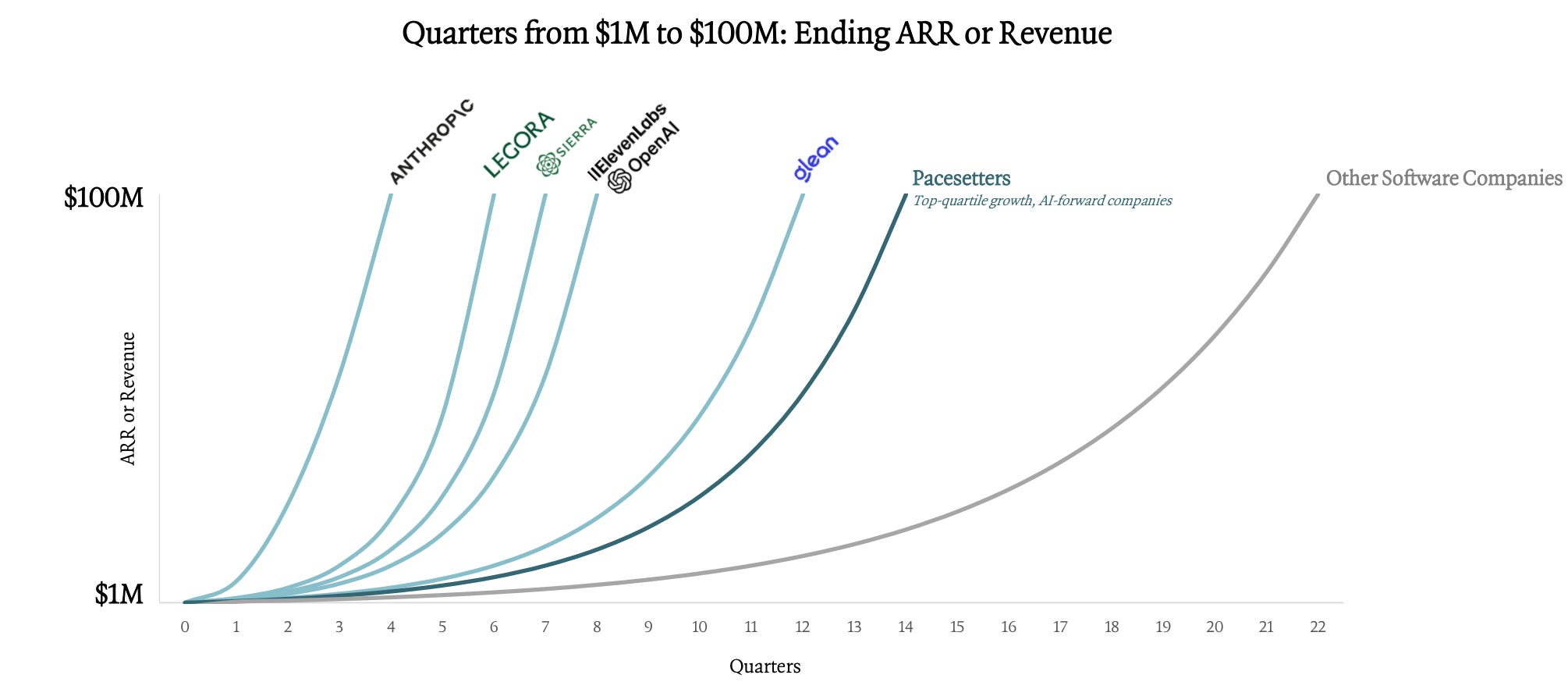
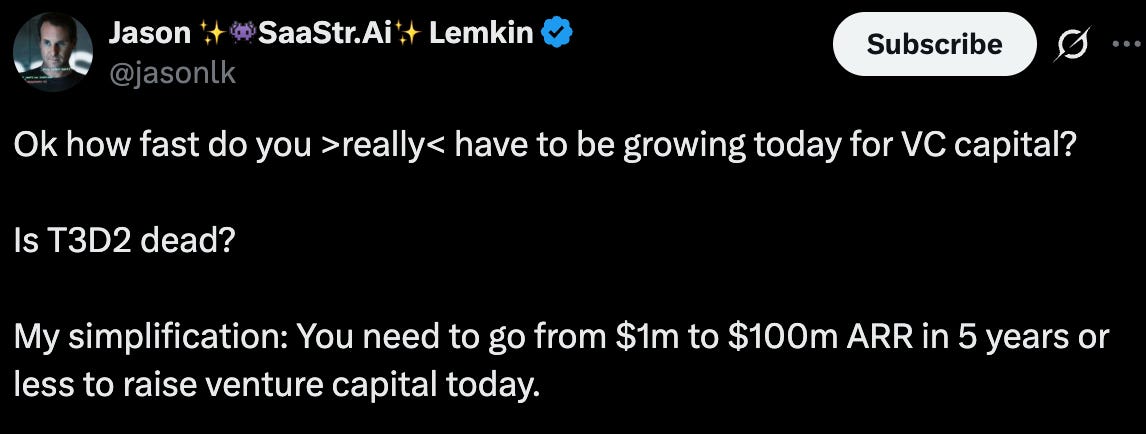
Jason believes a similar timeline is required in order to raise venture capital today - you have to be able to go from $1M to $100M in <5 years (ideally in less time)
Public Markets: It Pays to Grow
And in the public markets we are seeing the largest spread between high-growth (>20%) and slower growth (<20%) revenue multiples.
Currently, high-growth companies trade at 3.4x the revenue multiple of a slower-growth company. Everyone wants high revenue growth because you get a much higher multiple since outsized growth is viewed as evidence that you’re an AI winner.
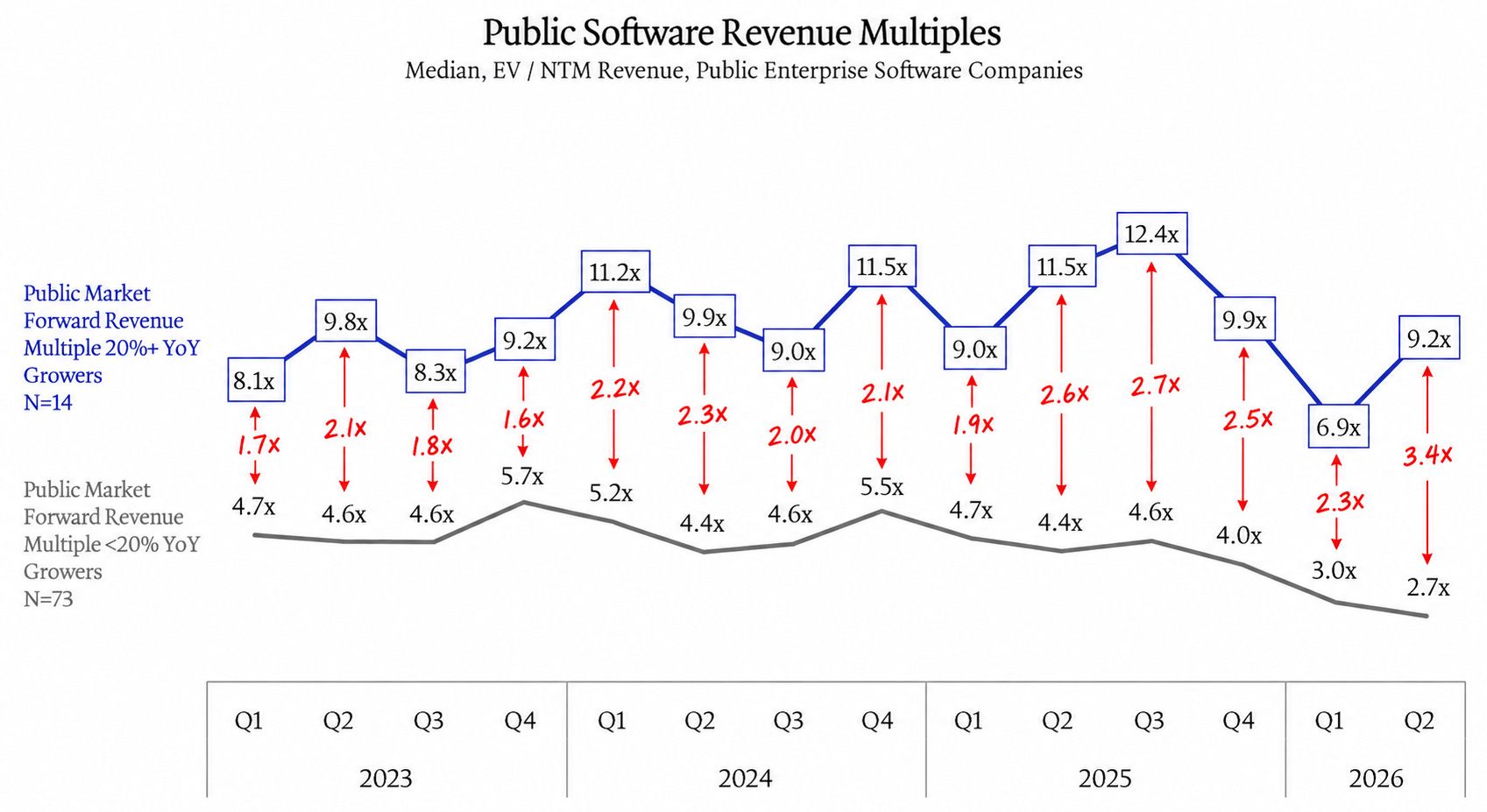
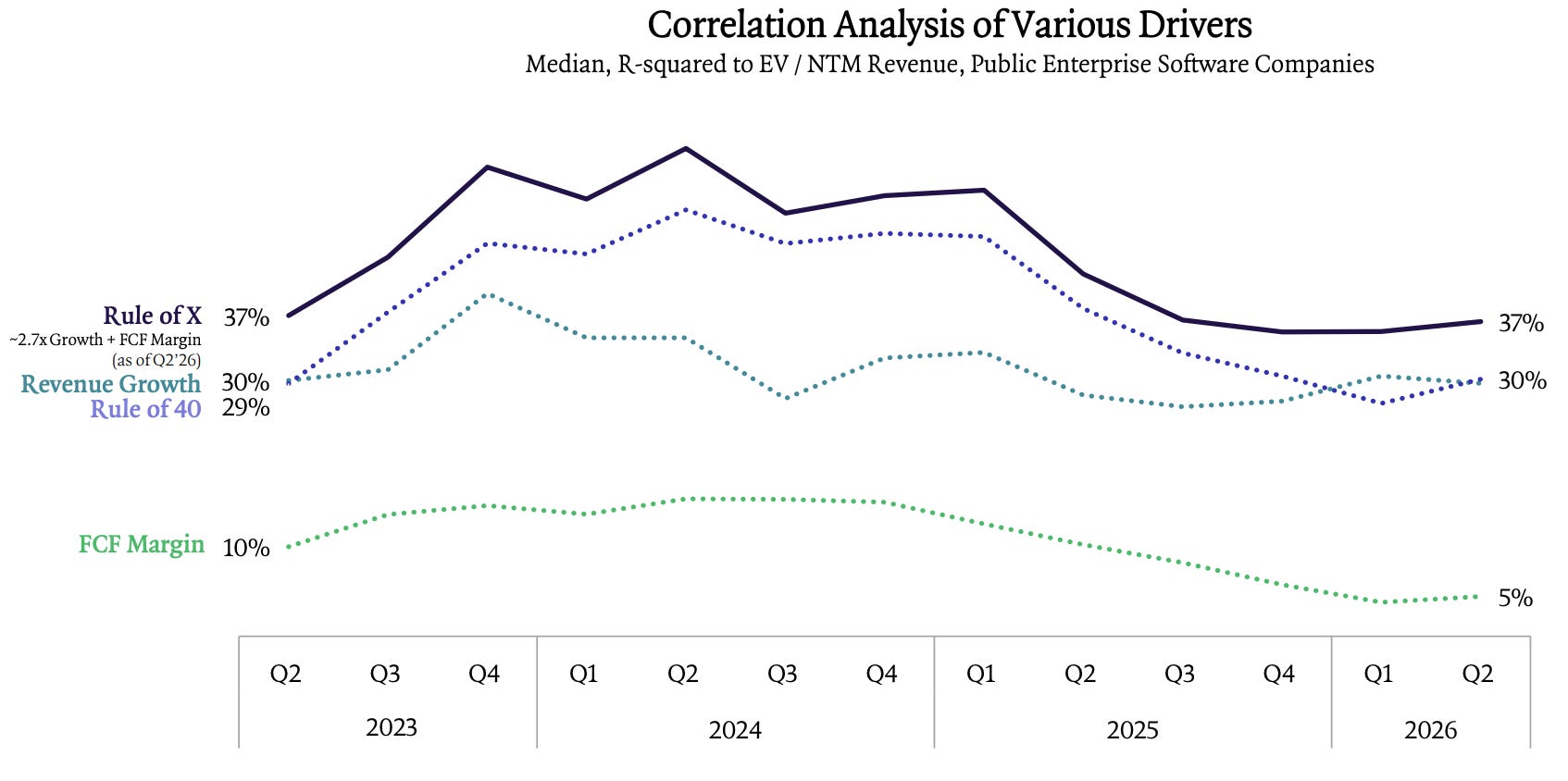
We are not “growth-at-all-costs” levels, but…it’s definitely being valued more today than the last few years…the relative importance of FCF margins has been cut in half over the past 3 years.
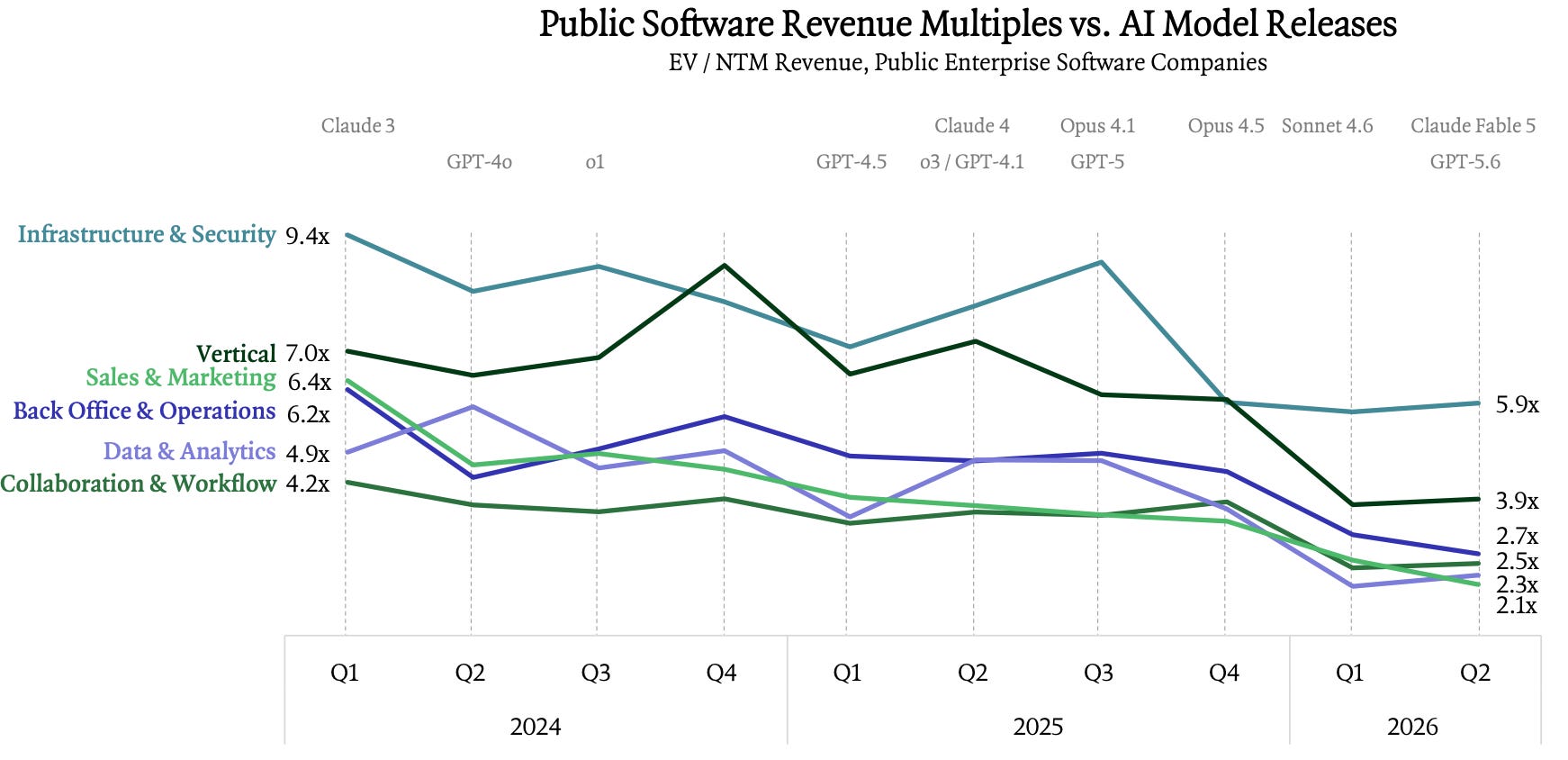
Below is an interesting chart that maps segments by AI model releases and how major releases can swing software stocks a lot. Infra & security remain the hottest with vertical software holding up pretty strong too.
Burn Baby Burn
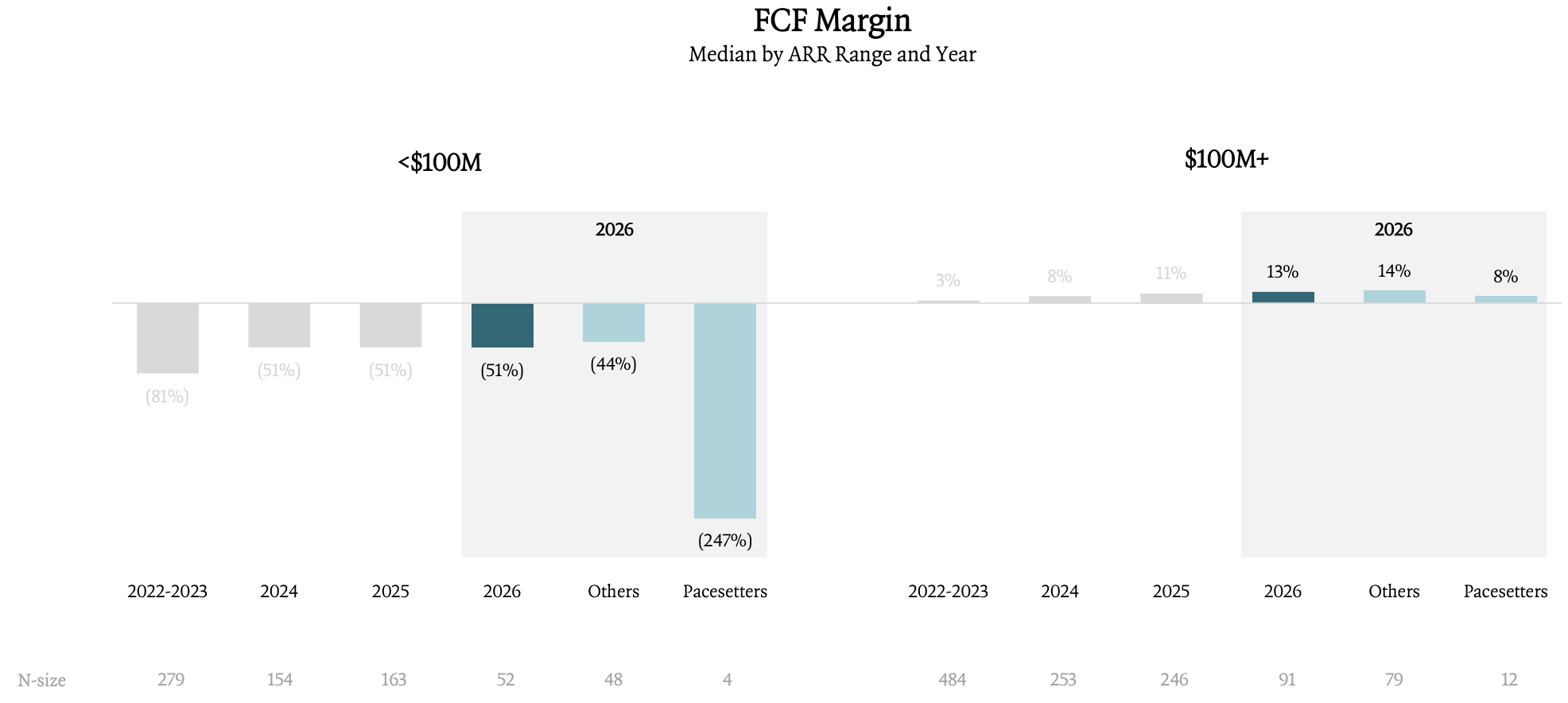
Pacesetters (ie super fast growers) are unsurprisingly burning A LOT of money in the <$100M segment. And that shifts a lot once they are >$100M.
But the sample sizes on both of these are really small for the Pacesetters, so take it with a grain of salt.
Benchmarks In The Wrong Hands
Too many folks benchmark their revenue growth to companies at a very different scale or with a very different profile.
We have top-quartile growth because the median public company revenue growth rate is 12% while ours is 18%!
Two things wrong with this:
You are at $50M of ARR so you can’t compare your growth rate to a company at $800M of ARR
That median 12% revenue growth also has a median 20% FCF margin. Yours is -10%
I am constantly surprised by the number of CEOs (and finance leaders) who make this mistake. Or they cherry-pick metrics without understanding/showing the full picture. They present it to the board like they are doing awesome. Board walks away thinking you are stupid…
Benchmarks are interesting, but be careful how you use them.
Final Thoughts
VCs are obsessed with revenue growth (part of their job description). If there is a new cohort of companies that are growing materially faster, that’s who they will wire their money to.
Many VCs will get burned badly on a few of these Pacesetter investments because the durability of the growth will turn out to be very weak in the long term. Revenue growth durability is one of the most important drivers of long-term valuation, but it’s really hard to predict, so investors often over-index on current growth. Grow fast, but make sure you can build a durable revenue engine.
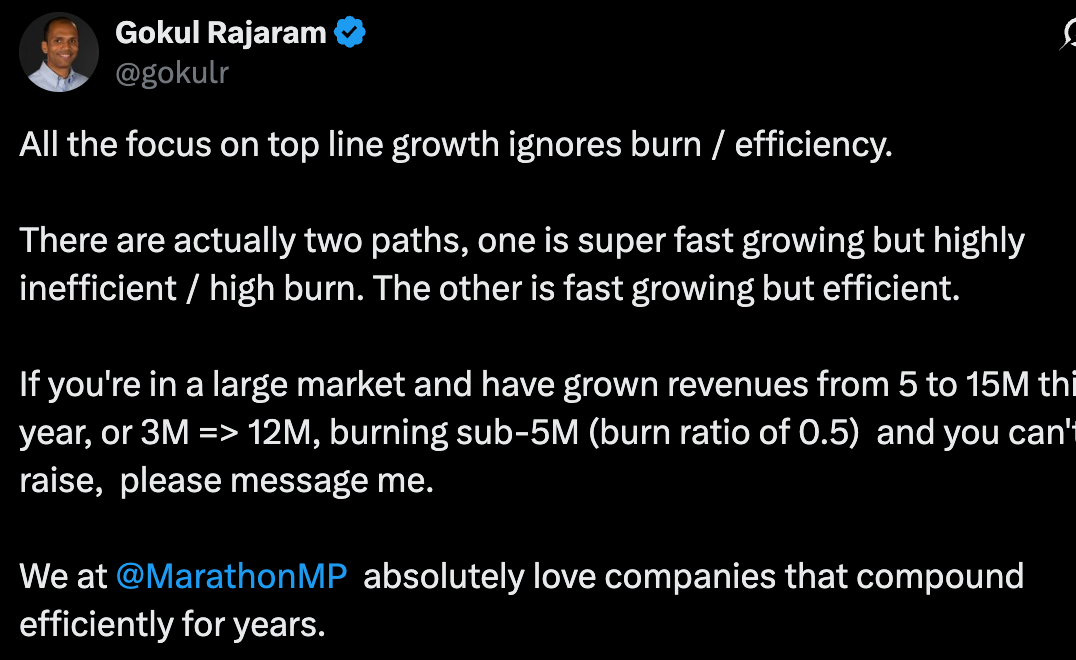
There are 2 paths to raising money from VCs today. Many VCs are narrowly focused on #1 right now, but folks like Gokul are also looking for companies that might be growing slightly slower but are efficient and can have very durable growth.
Get Pacesetter-level metrics: Super fast revenue growth and likely high burn
Fast Growth & Efficient: Growth is strong, but not “Pacesetter” levels (more like T2D3). And it’s highly efficient
And if you can’t do #1 or #2, then you at least need a plan to get to FCF breakeven so you can control your destiny. But if you want a decent valuation for an eventual exit, then you still need to figure out how to grow faster.
Footnotes:
Check out The CFO Guide to AI Strategy and figure out how your team should be leveraging AI to get the most ROI
Full Report: ICONIQ - State of Scaling 2026
Subscribe and share with your friends
*Disclaimer: Informational and educational purposes only. Not tax, legal, or investment advice. The author may own positions in companies discussed. Do your own research.