
Brought to you by…Deel

For finance leaders, managing international payroll and compliance requires expertise. Our ‘Guide to EOR for Startups’ offers a detailed look at efficient global payroll management & compliance. This guide will help you:
Manage cross-border payroll easily
Navigate tax implications across jurisdictions
Reduce financial risks associated with global growth
10 Reasons Why I’m Churning
Churn is going to get really ugly in 2026. It’s going to break unit economics and put many companies out of business. But…it will also be an opportunity for other vendors to capture more new business.
Some reasons are the same, but AI has created new reasons to churn vendors in 2026. If you own your department’s budget, then you should be thinking about these as well.
Below are 10 reasons that are top of mind (in no particular order):
1. Agent-Readiness Is the New Integration Story
Vendors used to brag about integration counts (and that matters). Now I want to know if your product can be driven by an agent.
Do you have an MCP connector?
Are your APIs clean enough that an agent can actually use them, or is everything locked behind a UI?
Are you the best for AI agents to work with?
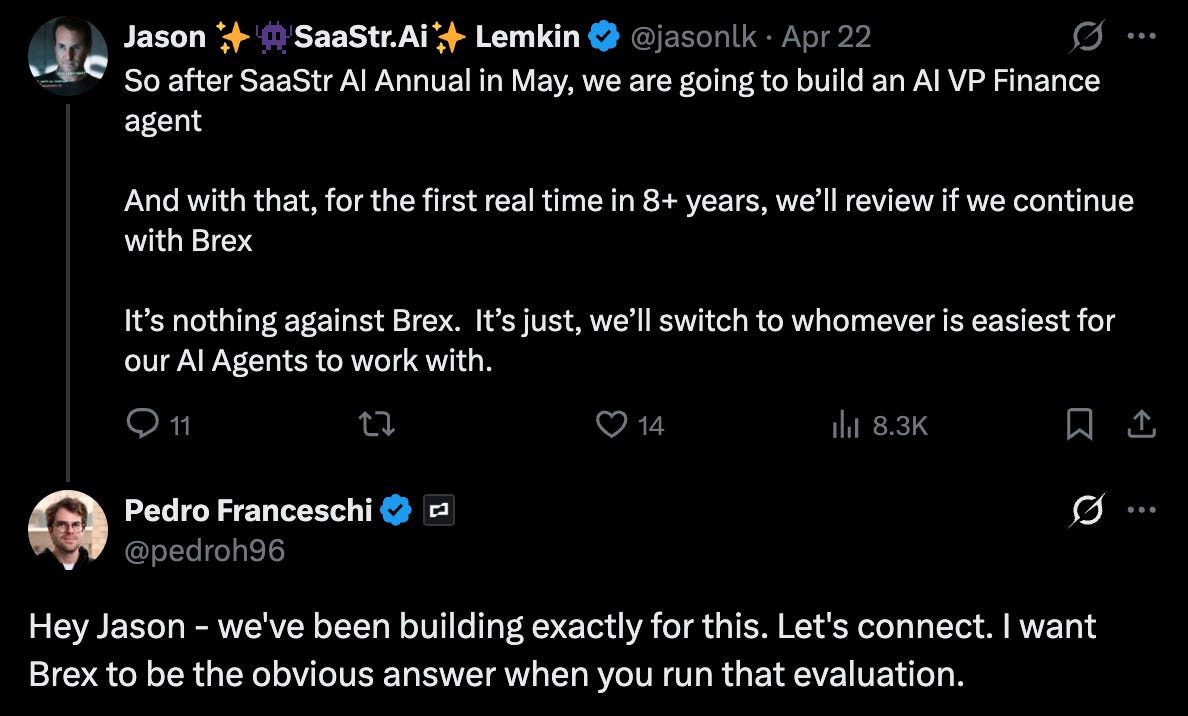
Customers will flock to the vendors that are the best for AI and AI agents. Vendors must expose clean APIs/MCP/agent-readable surfaces in 2026. And leaders should be obsessed with doing that (like Pedro).
2. Vendor Consolidation Is Growing
AI is enabling (and forcing) companies to go multi-product much sooner and with a lot more products. But this also means I will be consolidating even more vendors because there will be more overlap.
Recently, one of my vendors added a tool that did ~60% of what I was paying another one of my vendors ~$80K/year for. The 60% wasn’t perfect, but it was good enough. And the remaining 40% gap either wasn’t that big of a deal or we could leverage AI to fill the gap.
We churned, saved $80K, and had minimal impact on our processes (some was actually a bit better because we built a custom tool for those specific features).
3. Trading Nice-to-Haves for Tokens
“Nice-to-haves” have always been at risk of being cut when belts tighten, but two additional things are happening today:
AI has pushed more tools into 'nice-to-have' territory.
Departments are being tasked with budget tradeoffs. If you want a bigger token budget (most do), then something else needs to be cut.
Headcount is obviously the biggest lever, but as more things move into “nice-to-have”, those become a bigger risk.
4. Stupid Pricing Models
Pricing models have become a key strategic decision with AI. Seat-based pricing was so easy in comparison. It’s much harder to get right today with all the flavors of consumption-based pricing.
I hate nothing more than feeling like I am getting a bad deal. So when pricing doesn’t align with how I perceive value, I feel like I am getting screwed.
Companies are scrambling to update pricing for an AI world (where seats become meaningless for most). And they should. But a few pieces of advice:
Get cross-functional involvement and test it with customers. And continue to iterate. You can’t set it and forget it anymore.
Be generous with existing customers. Pricing model changes often feel like it’s a bad deal for them (especially CFOs).
Don’t sneakily add a price increase with a pricing model change. This happened to me recently and that kicked off a churn conversation.
5. Weak Support
This is increasingly becoming a differentiator. The AI support bots are cool (but they are table stakes).
I want real support (technical support, “forward deployed engineers”, CSM, or whatever you want to call it) that can help me get implemented quickly and be there as needs change, especially as I adopt your AI stuff.
Last year I churned from a vendor that refused to get on a call with me to discuss massive overages. They wanted me to sign an SOW and pay for the privilege of talking with them about why I didn’t understand our bills. That is a problem in itself…
6. Weak Brand Erodes Trust in AI Roadmap
Every (good) tech company has goals in 2026 to materially leverage AI across the company so everyone wants to be on the best tools to leverage AI.
Branding works on me whether I like to admit it or not. A strong AI brand from another vendor opens up the churn conversation. “Am I on the right tool? My vendor can’t do that much with AI.” I want my teams using the best AI stuff.
7. Building Internally
I don’t want to build software internally. No one does (at least they shouldn’t). But it’s increasingly becoming a viable option for many areas.
But even more important than a full internal build replacement (which I think will continue to be rare) is the internal build of add-on features. We still want the core tool, but the individual features can be replaced with some light internal vibe coding or AI magic.
I have already done this with a few features. Not only did we save money, but we were able to customize those features more to our needs.
8. AI Lowers Switching Costs
In the past, I found myself frequently saying the following as it relates to our tech stack:
If I could snap my fingers and be on [X] vendor, then I would. But I am too busy to implement right now, it’s not worth the change risk, we have other priorities, etc.
AI and the AI-native companies have lowered this barrier. This means downgrades will increase for most vendors…
9. The AI Experimental Budget is Ending
We created an AI slush fund for our teams to experiment with AI. But that era is ending. Now we are pushing departments to narrow the list and choose.
You can’t have Claude and ChatGPT enterprise plans. Choose one.
Or the finance department has a lot of overlapping AI forecasting tools. You must consolidate. We want teams to start measuring the value they are getting. If value is weak, then it’s time to cut.
10. I Have Had Time to Prepare for the Churn
AI (and process changes) has changed what I need in my tech stack.
This started happening last year, but it was too soon to churn, so I got stuck renewing for another year. I have a few of those contracts ending this year.
90%+ of the software churn from AI hasn’t hit yet because of this. Time was needed to update processes, evaluate alternatives, build something internally, etc. And folks may have had to sign another one-year contract to bridge the gap.
More churn is coming…they just haven’t had the chance yet.
Churn Breaks Current Unit Economics
If churn is increasing (which it is), then a lot of company unit economics are going to break.
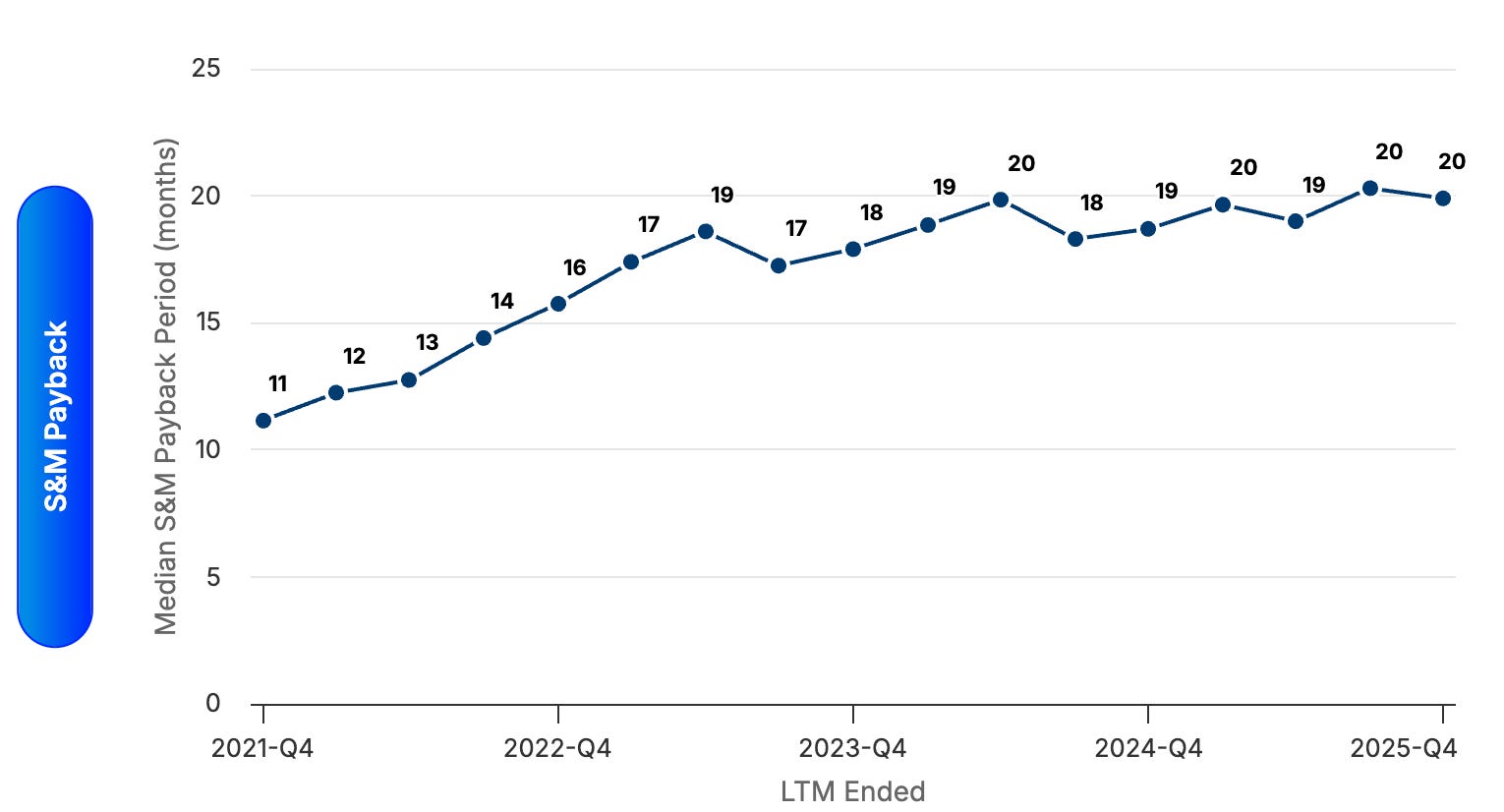
A CAC payback period of ~18+ months is no longer an option for most companies. That only worked in the old SaaS world when we assumed 5+ year average customer retention.
Goal #1: Figure out how to win in 2026 (with AI)
Goal #2: Lower your CAC payback period
The hottest AI companies can still fundraise to fund their high CAC paybacks, but most of us can’t do that anymore. And even the fundraising for the hottest AI companies will eventually dry up if CAC stays high.
Higher churn requires a lower CAC payback period for the math to work.
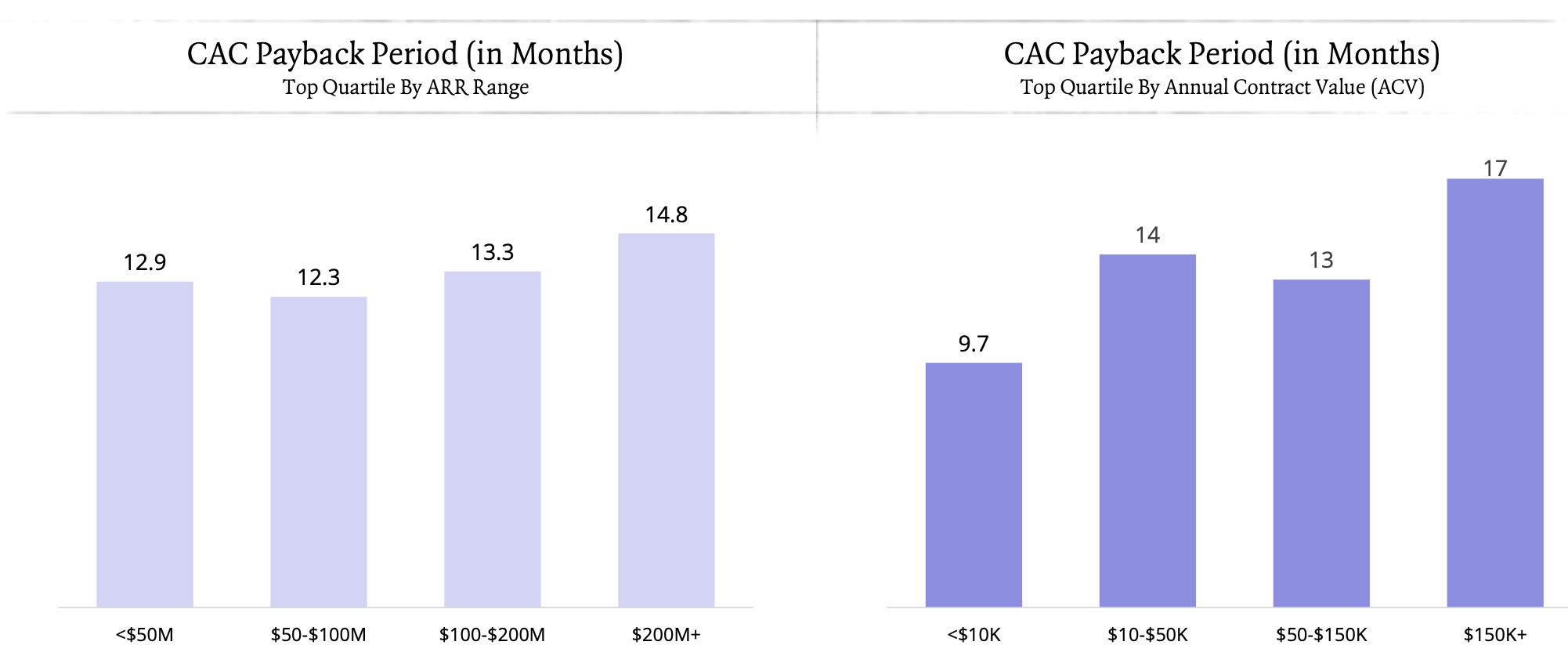
Below are some public and private company CAC benchmarks. They are both too high for the age of AI.
Public companies: median 20-month S&M payback period
Private companies: might have a slightly lower median, but still high. Below are the top-quartile payback periods of a top-decile firm (ICONIQ)
Footnotes:
Check out the EOR Guide. It’s a must-read if you have international employees or are thinking about expanding more internationally.
Want to sponsor? Email onlycfo@onlycfo.io
📚 This Week’s Interesting Things:
Big 4 is getting leaner…
Deloitte is cutting a lot of their generous benefits (parental leave from 16 to 8 weeks, reduced PTO, pension plan frozen, etc). There will be more companies that follow…
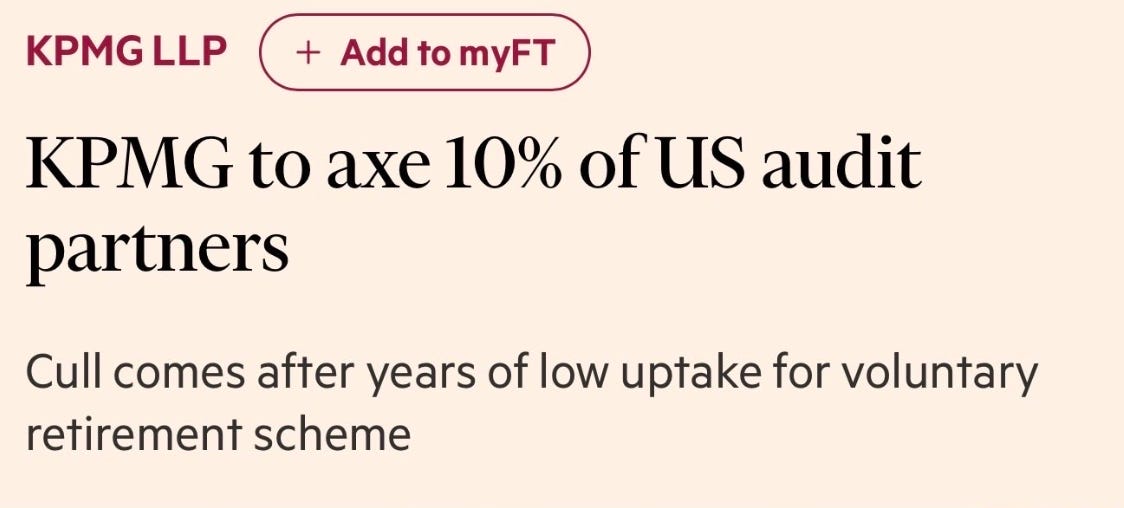
And KPMG just fired 10% of their US audit partners.

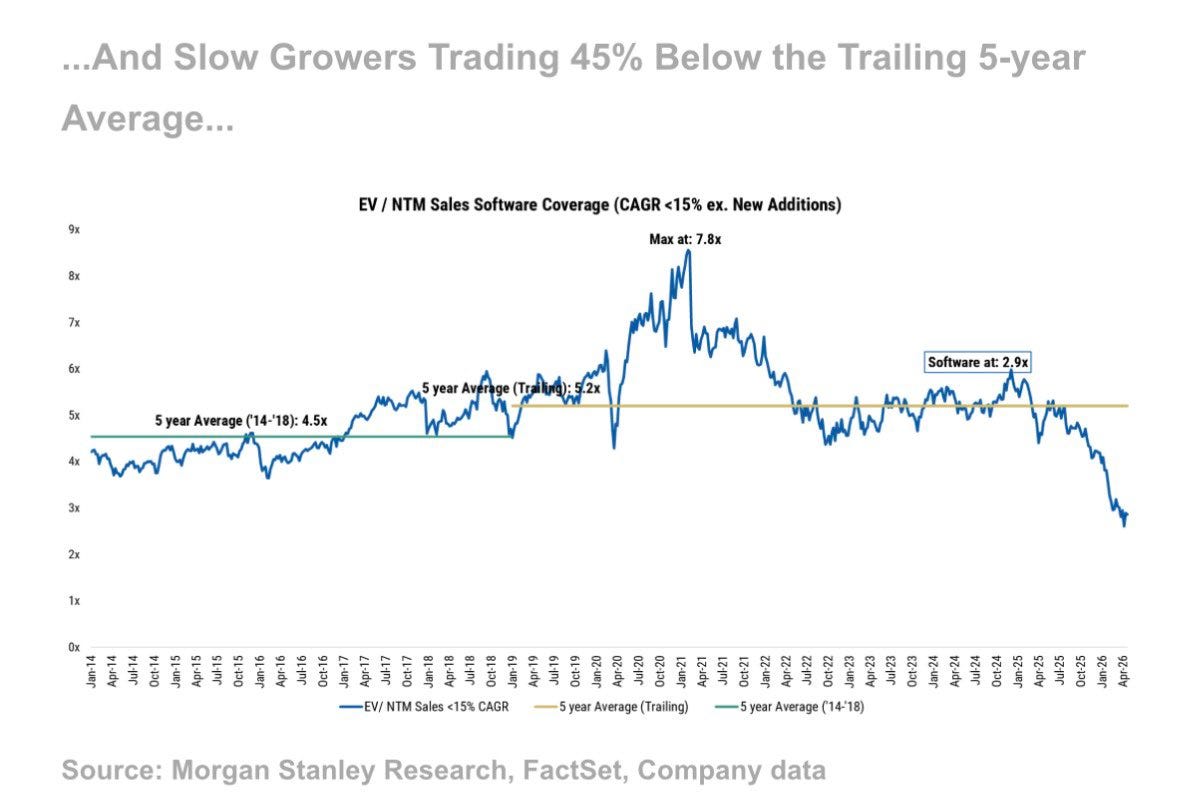
Slow growth is a valuation death sentence
As I discussed in my last post, investors are assuming slow growth means AI is destroying their business, so it has zero terminal value now. And the valuation multiples reflect that…
Everyone Trying to Get Anthropic Stock
The seller is a banker and really wants some Anthropic stock…This used to be a joke, but now homes in the Bay Area are being priced with pre-IPO equity.

Two comments: once again we see that tech oscillates between bundling and unbundling. Sometimes it seems to me this unbundling will be accomplished with a machete, not a scissors...
Two, as a consultant I look for problems that a potential client is actively trying to solve. "It's not a priority" (typically for the excellent reasons you cite) is the biggest blocker. I wonder if that opportunity space just got wider, and how it will work in practice. The easy button may have just gotten bigger, in other words.
The contract churn problem is especially acute for AI tools right now. Most mid-market companies signed 1-2 year AI commitments in 2024-2025 based on demo performance, not actual deployment results. Now they're hitting renewal season with 6-12 months of real usage data that rarely matches the original purchase case. The buyers who come out ahead are the ones who built usage benchmarks and ROI checkpoints into the original contract language — not those renegotiating from scratch at renewal.