
Brought to you by…Deel

I’ve seen companies roll out new global comp strategies that drove employees to quit. It felt unfair, was poorly rolled out, or was just a bad comp strategy. It’s hard to get right.
What pay model to use? Anchor city-based, single global pay scale, localized, etc.
How do we do equity comp across jurisdictions?
Compliance considerations? Local HR laws, mandatory bonuses, statutory benefits, overtime, etc.
Check out Deel’s guide for a breakdown of key decisions when creating your global comp strategy.
A Buyer’s Market
It is a software/AI tool buyer’s market in 2026. This has become very clear to me based on some recent vendor renewal conversations. Most companies (and their sales reps) are panicking…
I have been adopting Michael Scott’s negotiating tactics for my renewals. It’s working. And it’s scary how much leverage I have in 2026 with a lot of my vendors.
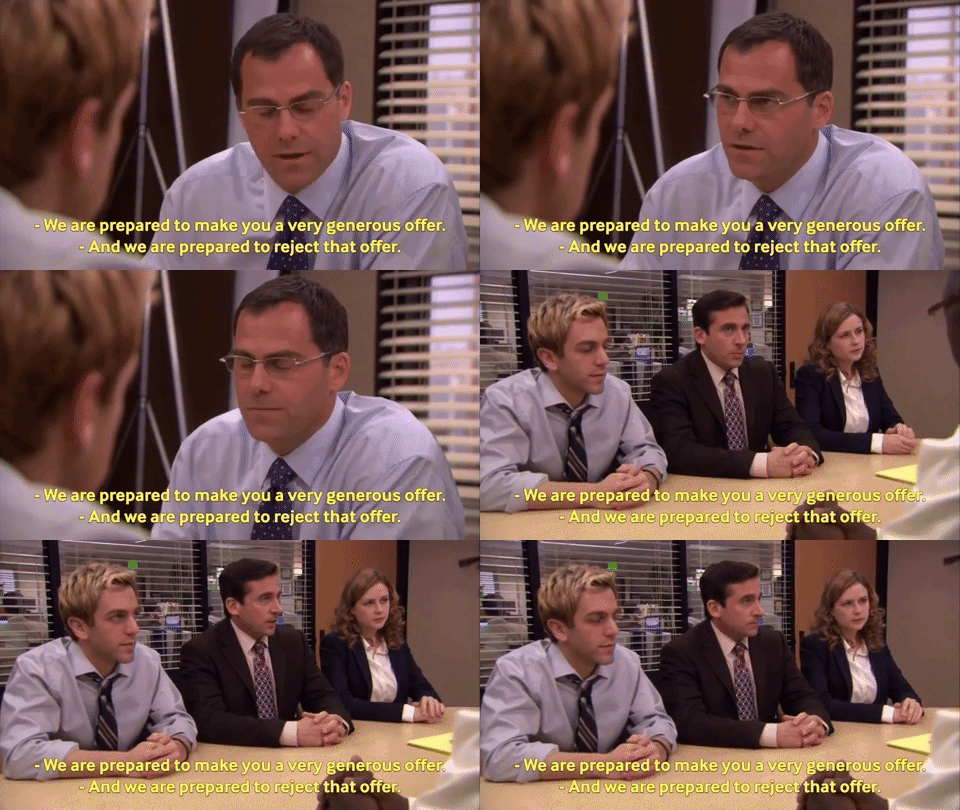
This post is about what I’m thinking about as a leader at a tech company and how that impacts my approach to vendor management and procurement in 2026.
AI Gives Buyers Power
Before I get into some of my vendor negotiation tactics, it’s important to understand why I have so much leverage today.
The Spend Buckets:
Spend falls into one (or sometimes multiple) of the four buckets below. I have ordered them based on their general importance. The first three rankings may move slightly based on the company’s phase and objectives, but #4 is ALWAYS last.
Increases revenue
Mission-critical (cybersecurity, ERP, etc)
Improves efficiencies
Candy (or “nice-to-have”) tool that doesn’t really fit into the above groups
“Candy” is not the bucket you want to be in as a company. You are the first spend bucket to get cut, pricing power is weak, and there are usually lots of options. I frequently talk to vendors who believe that they are in the top 3 when they actually are candy.
But the bigger problem that a lot of software/AI companies are facing in 2026 is that the nice-to-have (candy) bucket is rapidly expanding.
AI Pushes Vendors Into “Nice-to-Have”
AI is pushing a lot of vendors into the “nice-to-have” spend bucket.
Build vs buy: the solution that the tool itself solves might be necessary, but can the AI base models solve it directly? Or is it easy now for companies to build internally something that solves 80% of what they need?
“Nice-to-have” add-on features: There are lots of tools where 50%+ of the price relates to add-on features. The core product may sit in buckets 1-3 (and you really need it), but you no longer need all the add-ons. Folks are going to see a lot of downgrades in 2026.
Vendors are going more multi-product. I am a strong proponent of going more multi-product faster. This is basically required in the age of AI because you can move so much faster and it makes you stickier. But it also means many of my vendors are starting to have more overlap. Some are offering 70%+ of the same functionality for free that I am getting from another vendor…
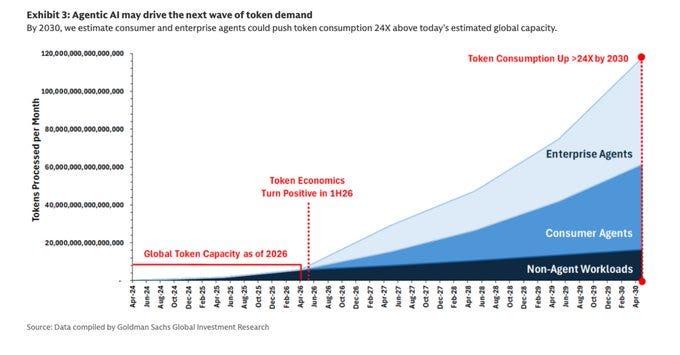
AI tokenmaxxing is eating budget. The AI models now sit at the very top of the need-to-have list (before anything else), which means if you have limited budget, then everything else gets pushed down in priority. Tokenmaxxing is where employee productivity is measured by number of AI tokens consumed. The result? Costs are going up, up, up, and away.
2026 is the Year of Churn
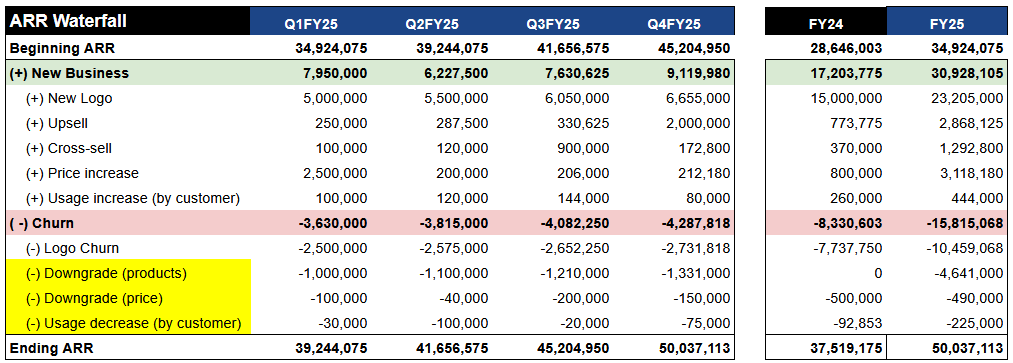
I wrote about this a few weeks ago, but churn is going way up in 2026 (especially in H2). And more specifically, downgrades. Because of the things I mentioned above, customers are downgrading features, they are getting bigger price discounts, usage is decreasing on many modules, etc.
This will show up in your retention metrics like GRR and NRR, but you will want to drill into what’s happening. Internally, I am breaking down the churn number a lot more in 2026.
I want the information below (and by major product as well).
Buyers Need to Ask More Questions
Below are some questions I am asking for software purchase requests. The level of detail I dive into depends on the size of the contract and importance of the tool.
Tool Needs
What bucket does the tool fall into and can you quantify it? This is important for me to understand its priority against our current company objectives.
Increases revenue
Mission-critical
Improves efficiencies
Candy (nice-to-have)
New vendors: Why do we need [X] tool now? We were fine before.
Renewals:
Have AI and related process changes made this tool not needed or just a nice-to-have now?
Has our business changed in a way that this tool isn’t needed right now? Example: I know a lot of finance teams that bought expensive tools in preparation for an IPO that is no longer coming (at least anytime soon). Once purchased, these tools can feel very critical, but often aren’t and they don’t add real value if you aren’t actually close to an IPO.
Budget Considerations
Is the spend in the budget? If not, how will we make up the difference? You’ve got two choices…1) people or 2) software/AI.
Could we build all or some of this internally? Some features are not only cheaper to build internally but more customizable so they work even better for you.
How much are the alternatives? AI is quickly closing the product gap with many competitors, so I expect more pricing concentration (fewer major outliers) than before.
What tools do we already have with overlapping functionality? As I mentioned earlier, this is accelerating in the age of AI. One of my vendors just released a module, for free, that is 80% of the functionality that I was paying another vendor $50K/year to do. This is going to become more common.
Agent/AI Capabilities
Do you have an MCP connector and are you easy for agents to work with? Everyone needs to be asking these questions in 2026. Agents will be running a significant amount of your processes (if they aren’t already) so you need a tool that plays nice with them.
Ask the seller, “How is your AI stuff different from what I can do with Claude/ChatGPT? If nothing else, it will make them nervous and result in a bigger discount. But I also want to actually know. If the sales rep fails to articulate a good answer then maybe the base models are fine to use instead.
Pricing
What are the implementation costs?
Will we need to upgrade plans soon to enterprise or some other tier?
I want a detailed analysis on how pricing works and modeling for what our planned usage will look like.
I start with distrust on the total estimated tool cost for usage-based pricing, so you’d better earn my trust with a thoughtful analysis.
What does the cost look like this year and how does it scale next year?
If we have significantly underutilized the tool under the first contract, then I am pushing hard come renewal. So teams need to make sure the company is getting maximum value out of the tool at least a few months before renewal, otherwise I am going to try to slash.
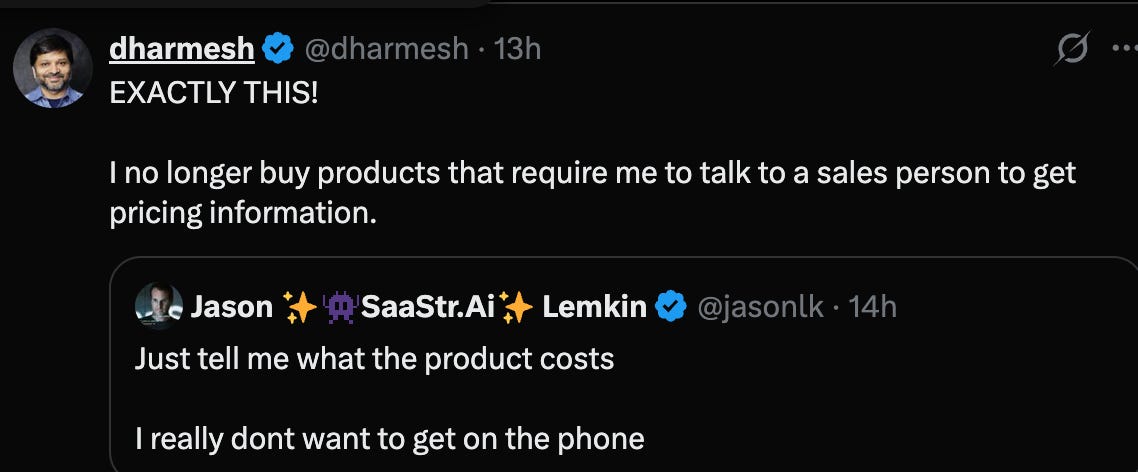
Just another thought on pricing below from the CTO of HubSpot and Jason.
What Are CFOs Doing?
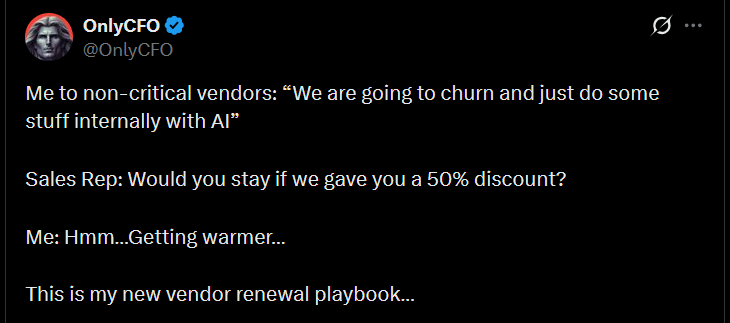
Maxing Discounts
5-Step Renewal Playbook
Step 1: Send cancellation notice (>3 months before renewal). Say you are evaluating options and don’t want to get stuck in an auto-renewal.
Step 2: Wait for the vendor to come back to you closer to your renewal with pricing, which will already be discounted more than usual given the cancellation notice.
Step 3: Stay silent. Wait for them to follow up.
Step 4: Tell them you like the tool, but it’s not critical, other current vendors have similar functionality, and/or the new one… “We are looking at doing some stuff internally with AI instead.”
Step 5 (optional): If a real threat, tell them you are churning after all because the price isn’t worth it given the other options.
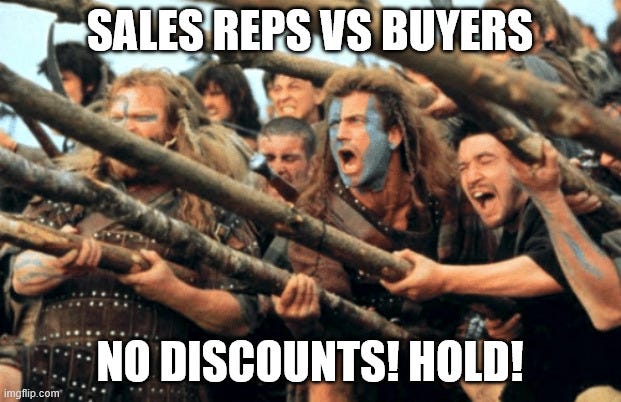
I talk to a lot of vendors and a lot of companies selling stuff. All of them are trying to hold the discounting line right now, but if pushed…there is definitely willingness to go lower.
You don’t have to be that aggressive, but you should definitely be pushing hard on pricing on all vendor contracts.
Pricing Benchmarks
Pricing benchmarks are important, but…don’t let them anchor you on the discount you might be able to get. Like I said, 2026 is a buyer’s market. Pricing benchmarks are lagging and they are an average/median.
I like to have them, but I also know sales reps are discounting a lot more than that in 2026…
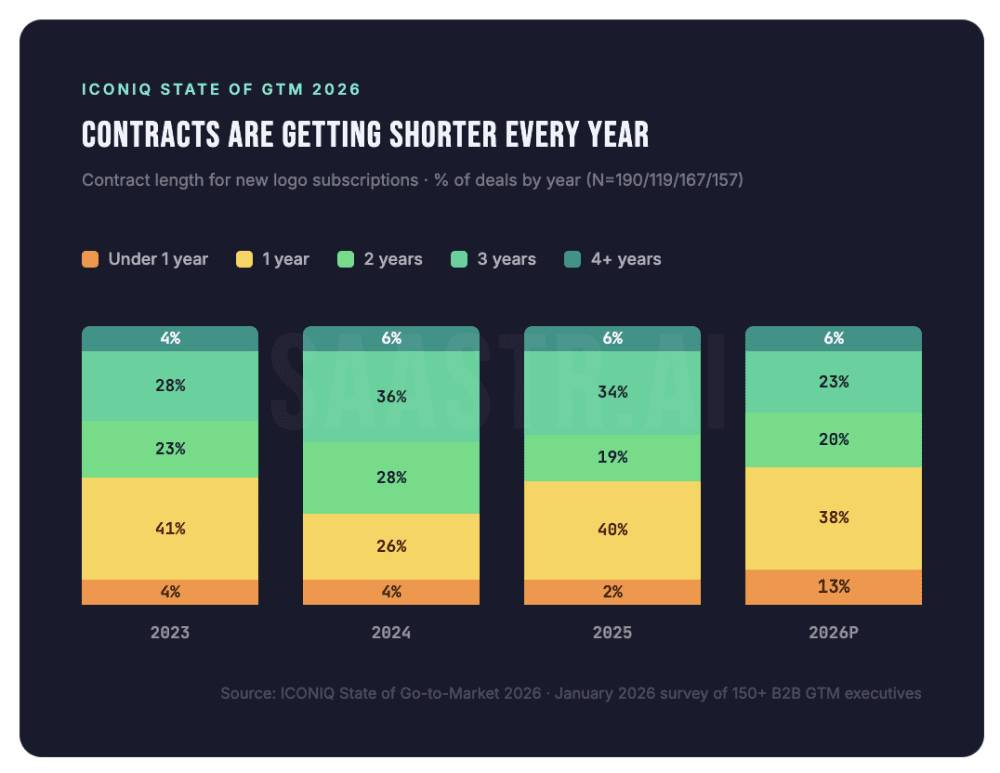
Multi-Year Contracts:
Company Policy: No multi-year contracts
I, of course, will do some multi-year contracts (AWS, Azure, CRM, etc), but basically the only ones we will do are ones that I am involved with negotiating anyway so the company policy can still be “we don’t do them.”
And more folks are following this advice. Signing multi-year deals on most software in 2026 feels irresponsible. Who knows what tools/needs will look like in 2 years…
The larger discount with multi-year contracts is not worth the risk.
Auto-renewal:
I always try to negotiate these out, and if the vendor refuses, then I will just send an opt-out notice the day after the contract is signed. Don’t get stuck in an auto-renew.
In the past, vendors would often allow you to get out if you were past the auto-renew date, but I have heard more stories recently of vendors holding customers to it. Desperate times…
Everyone Wants a POC
Most AI vendors are offering POCs. If you are not, then I am very unlikely to consider you. I want a real POC that proves value before I commit to a one-year deal.
Final Thoughts
On the buyer side, continually re-evaluate your needs. Yes, you can save a lot of money with vendors right now, but that is only part of it. Companies need to make sure they have the right tools for their team at the right time. And needs are changing rapidly. If you are at a company and everyone doesn’t have access to some AI model, then you are bringing a keyboard to a gunfight.
On the seller side, figure out how you stay out of the nice-to-have bucket as much as possible. The amount of churn, downgrades, and concessions made on contracts will indicate if you are in that category.
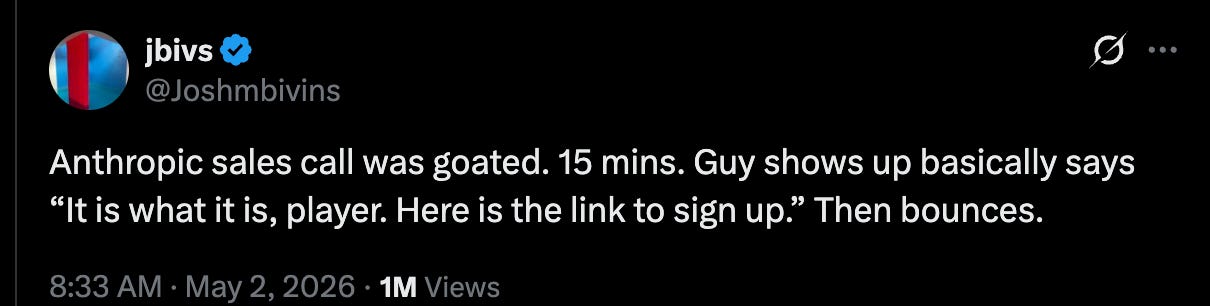
You know who isn’t a nice-to-have in 2026? Anthropic. And it is evident from how their sales calls go :). Unless your deal is massive, they may pick up the phone to chat but not much beyond that.
Footnotes:
Check out this compensation guide for managing a global company. Deel has some of the best data and resources out there.
Email me at onlycfo@onlycfo.io to say hi, provide feedback, or ask questions.
📚 This Week’s Interesting Things:
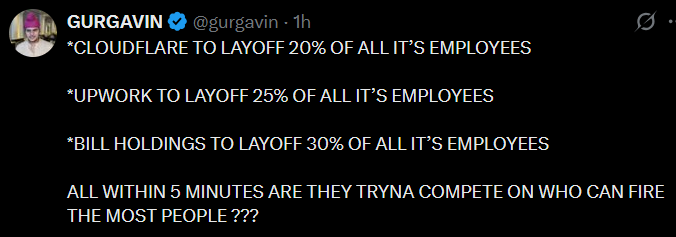
More Layoffs
Cloudflare responded with the following on social media about why they have so many job openings after a massive layoff.
This isn’t about cutting headcount. It’s about shifting what roles we need. More people building and selling product. Less providing back office functions to support them.
Everyone is a builder in 2026.
Agents are Eating Tokens
Token budgets are about to get craaazy…
Every seller should read the buyer's playbook, and this is a clean one. The uncomfortable takeaway, the tools getting cancelled first are the ones that were always a "nice to have" and knew it. You don't out-discount this pressure, you avoid it by being the thing whose removal someone would actually feel.
The information asymmetry you describe is the core problem in AI procurement specifically. Vendors build their pitch around best-case deployment scenarios and benchmark performance; buyers don't have access to real production data across comparable companies. That's the gap that makes mid-market buyers especially vulnerable — they don't have the procurement infrastructure that enterprise teams use to normalize vendor claims, but they're being sold enterprise-grade AI at enterprise complexity.