
Brought to you by…Brex

In the age of AI, finance teams need to move fast while staying in control.
Brex is the intelligent finance platform that gives you the AI-native workflows to move fast (handling receipts, memos, transaction monitoring, policy enforcement, etc) while staying in control and eliminating manual busy work.
Join companies like Anthropic and Zoom that are moving faster because of Brex.
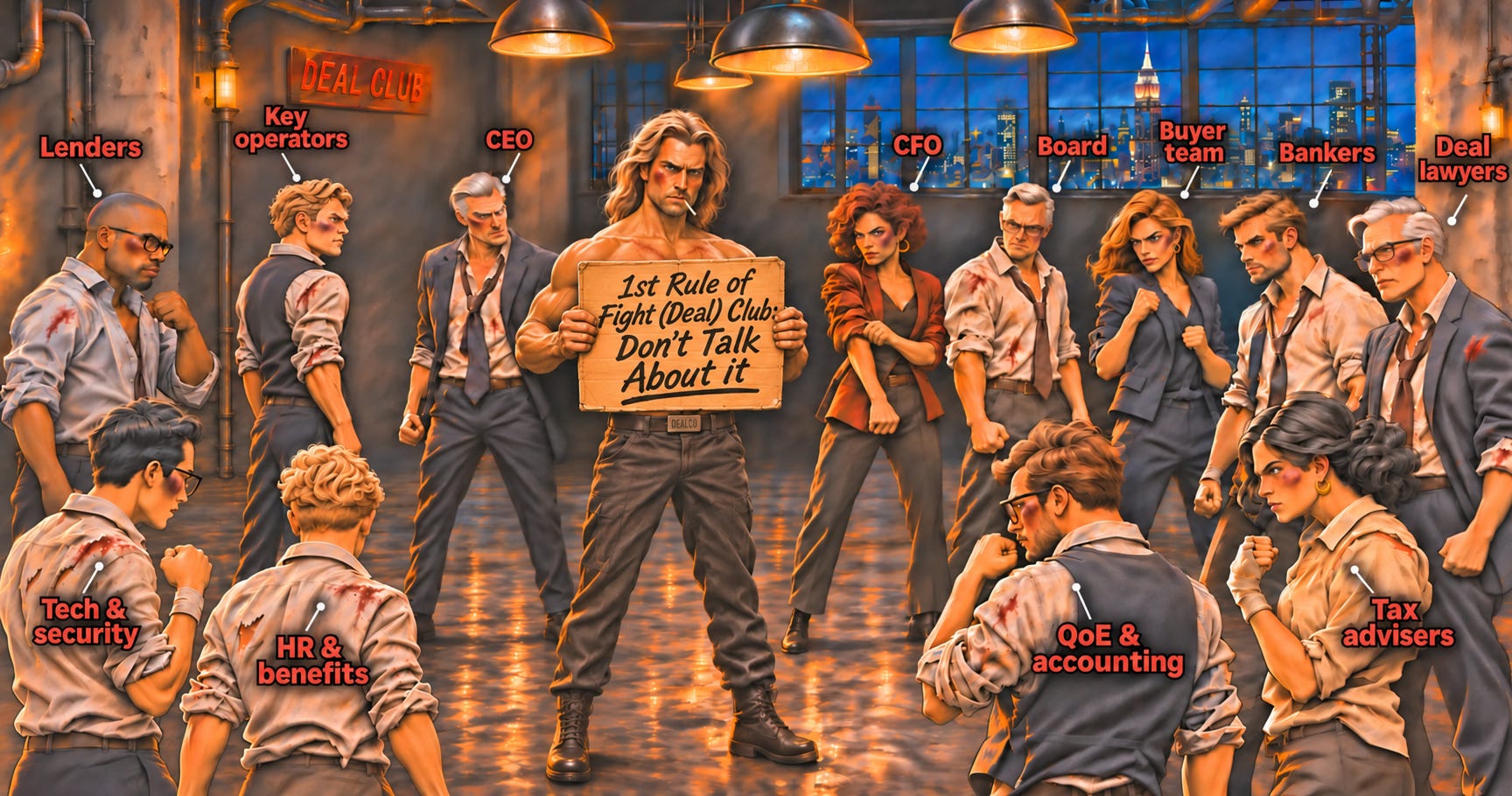
The acquisition process is kind of like Fight Club. The first rule is you don’t talk about Fight Club ….
The goal is to tell the fewest number of people possible about the potential deal while providing timely (and good) support to get the deal done.
Rumors spread quickly. The more people that know about the potential deal, the more likely it is to get out of the circle of trust. Banker selection is a common source of leaks (whoever doesn’t get the deal, leaks it). Talk to as few banks as possible to get someone you trust.
Caveat: Sometimes these rumors are beneficial (and sometimes intentionally leaked) because they nudge slower or cheaper potential acquirers to make a bid (or increase their bid). But this can also backfire for the other reasons listed…
Distraction and employee anxiety. Very hard to focus for folks that hear about the deal (especially without all the facts/context) - Will I make any money? Will I have a job after the deal closes? How long will it take?
Preserve negotiating leverage. Leaks about buyer, price, or timing can complicate negotiations
Not all deals close. As you will read in this post, plenty of deals don’t close (especially earlier on in the process). Once employees know you are trying to sell then many will start looking for a new job. Could spook prospects in pending sales deals, scare customers that are renewing to look for alternatives, etc
You want to be able to tell the narrative of the acquisition once the deal is announced so tell as few people as possible to reduce chances of rumors leaking. Otherwise, people will create their own narratives, which are usually not as good.
Then all employees and the world can hear your narrative of the acquisition when the definitive agreement is signed and you announce the deal.
In this post, I am peeling back the curtain on the M&A timeline and process so you can learn what happens behind closed doors. I’ll also share some tips/advice for executives for when they go through the M&A process again.
Who’s Involved & What Do They Cost?
When a potential M&A process initially begins, typically just the CEO, CFO, and board know about the deal. Keeping the circle of trust small is important for the reasons I mentioned above, but eventually you have to read more people in (both internally and externally) as the process progresses.
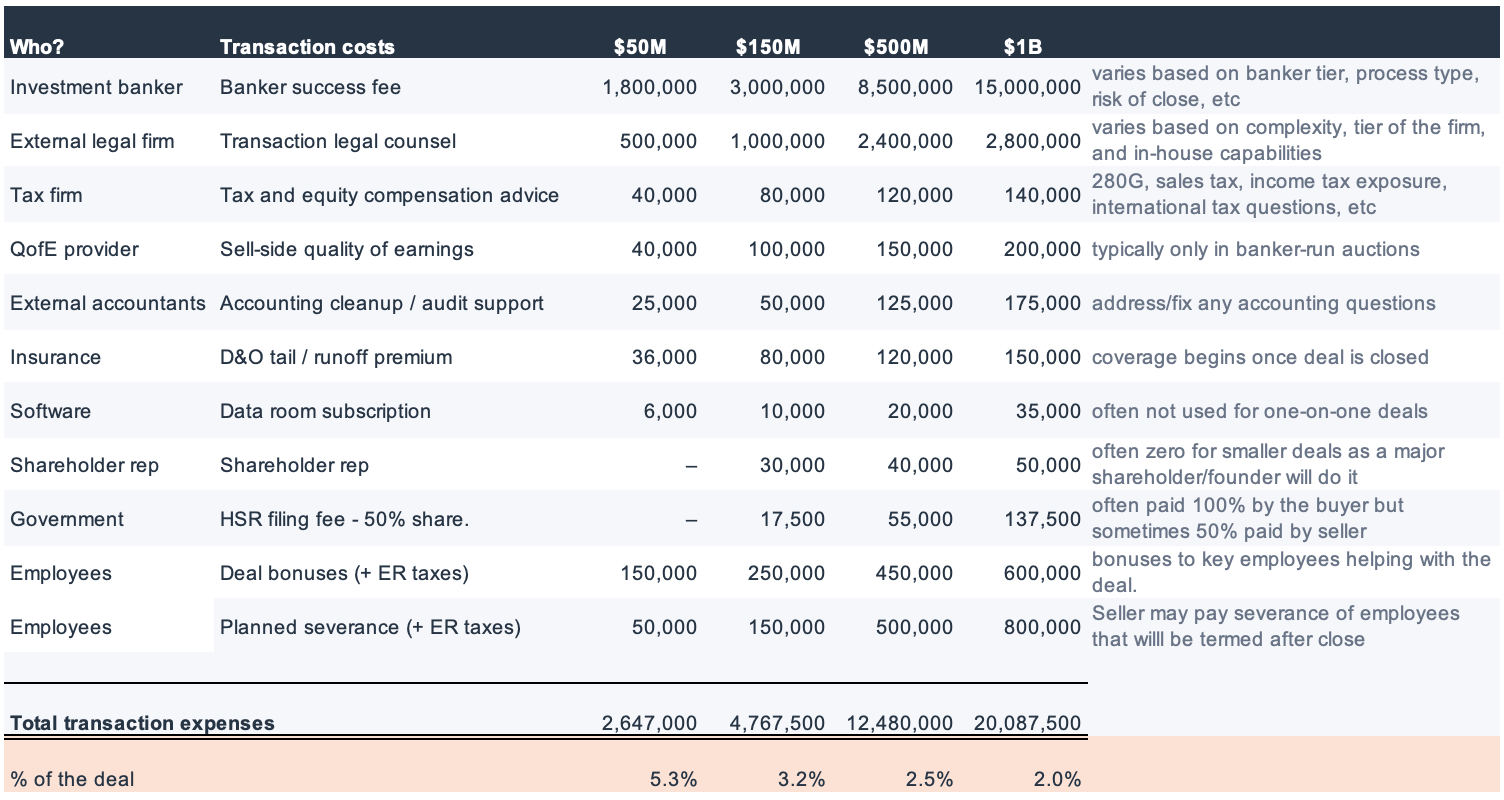
I’ll talk about the internal people who typically get involved in the next section, but I don’t think a lot of people understand how many external folks are also needed. And how expensive they can be!
Below are a few scenarios that show total seller transaction costs based on acquisition price. The seller and buyer typically pay all their own fees (like legal) while a few (like HSR) might be negotiated.
*There can be relatively large ranges in both banker and legal firm fees based on factors such as deal size, tier of the firm, risk of closing, etc.
Timeline of an Acquisition
The timeline of an acquisition depends on the path:
Banker-led auction process - you hire a banker to find a buyer
One-on-one - buyer initiates and you hire a banker to manage process
Banker-led processes (with multiple potential interested parties) are more complicated and take more time from beginning to end.
Step 0: Deciding to Sell
Before anything happens, the CEO and board need to decide if the acquisition path is something they want to seriously pursue. And remember, every company should be doing some prep work for M&A long before you want to get acquired. It makes everything sooo much better (price is higher, process is shorter, etc).
You also need to consider the alternatives. Price is obviously the biggest consideration in a potential acquisition, but there are others as well
Below is what Jay Kreps (CEO of Confluent which sold to IBM for $11B earlier this year) told me about their acquisition journey. Most people don’t think about this….
Intellectually it’s one of the most interesting exercises because the essence of the fiduciary duty is you have to imagine all the trajectories the company could travel, value what the company could be worth in that eventuality, and somehow probability weight all the outcomes. It’s about both the company but also the market environment you are working in. Intellectually, very interesting. Emotionally, extremely taxing.
It’s worse for public companies because the legal trolls always come out and say the acquisition price wasn’t good. So this analysis is critical to avoid legal issues later.
Erica Dorfman, Brex CFO, said the following on their acquisition by Capital One
The question wasn’t “do we need to sell,” it was “which path accelerates the mission fastest.” First, price and structure - this was really about looking at the premium, deal composition, and long-term impacts and alternatives.
Then independence post-close: which is what we and Capital One both believe will enable us to keep delivering the product roadmap to hit our combined goals.
Step 1: Signing the NDA
Before this step it’s just the CEO, the board, and likely the CFO who know about the inbound acquisition interest. The circle of trust is as small as possible.
Once the NDA is signed, the seller starts to share material confidential information. The goal is to provide enough high-level information (without sharing too much detail and sensitive information) for the buyer to decide whether to move forward in the process.
The information shared at this stage is high-level and is usually stuff that the small circle of trust (CEO, board, CFO) can provide themselves:
Summary financials
Management calls to discuss the business
Forecasted financials, summary pipeline, key metrics, etc
Current customer overview (names usually redacted) and key metrics
Product information
💡 Beware of companies (especially corp dev teams) just fishing for information. Pre-LOI, the sellers control what information they share and when. So be diligent in assessing serious interest versus folks just looking for information.
Step 1.5: More stuff for banker-led processes
Like I said earlier, banker-led processes (or those with multiple interested buyers) are usually more complicated. The below processes are usually skipped when it’s a one-on-one strategic interest because they aren’t really necessary on one-on-one deals initiated by a strategic (just slows things down).
Confidential Information Memorandum (CIM): a long marketing document about the company and its equity story to entice potential acquirers to move forward in the process. This is given after the NDA is signed.
Indication of Interest (IOI): potential acquirers will submit an IOI which is completely non-binding (unlike the NDA and LOI which both have some binding things), but provides a price, usually a price range, so that the company can select a few offers (if they have multiple) to advance in the process. IOIs can be useful though when there are lots of potential bidders. *Note - some buyers put in a high range just to reach the next round though.
Acceptance of IOIs: Data rooms are opened up, but highly sensitive data is still not shared. If this is a banker-led auction to push selling the business, then enough information needs to be shared to get potential buyers interested and excited to move to the LOI stage.
Step 2: Sign the LOI (aka term sheet)!
You now see the dollars you hope to make from the sale. Everything before an LOI just signals “We’re interested in learning more”. An LOI shifts that to “We’re committed to trying to close a deal”.

But…it’s still not final. Many acquisitions still fall through after the LOI is signed
Components of an LOI:
Price: the valuation and the payout structure
Form of consideration: cash, stock, rollover equity, earnout, etc
Tip: Upfront cash is the ideal obviously. And beware of earnouts. Assume any earnout is like a nice bonus. Good chance you won't get it.
Net working capital: agree on how much working capital stays at closing, which accounts count, and how any shortfall or excess adjusts the purchase price.
Tip: Make sure there is no double counting of items. Buyers sometimes try to include things in both net working capital and debt-like items.
Debt and debt-like items: This is an important one that catches many people by surprise (and when it’s too late). Debt reduces equity proceeds and if “debt-like” items are not clear at the LOI stage then buyers will try to put more items in there for the final agreement.
Tip: Some buyers push deferred revenue to be included as debt-like, but I think you should push for it to be net working capital. If they fight, then meet in the middle at cost to serve (deferred revenue * COGS %). If you have high gross margins then this is a lot better than 100% of deferred revenue being deducted.
Escrow terms: % of the consideration in escrow and length of escrow
Financing (and related contingencies): deal funding sources, whether that funding is committed, and if closing is contingent on the financing
Locked box vs. closing accounts: agree when the purchase price is fixed. A locked box uses a balance sheet date before closing while “closing accounts” use actual closing balances to adjust the price. There is typically no true-up after closing with a locked box while there often is with closing accounts (which is where a “purchase price adjustment” occurs)
Binding Stuff:
Exclusivity (no-shop) - how long you can’t evaluate or seek competing offers (15-90 days). This matters a lot for the buyer because diligence is expensive and they will put a lot of time and resources into the potential deal. Exclusivity puts negotiation power in the buyer’s hands after the LOI. Sellers want the shortest amount of time to keep pressure on the buyer. Pro tip - make sure the buyer has done enough diligence to feel confident moving forward otherwise you will risk retrades or deals falling through.
Expense responsibilities: each side pays its own expenses
Other Stuff
Diligence plan & timeline: agree on what the buyer needs to review and target timelines for diligence, signing, and closing.
Employee compensation: biggest thing being equity revesting, retention packages, and identification of key employees (which may indicate potential RIFs when the deal closes and impact transaction costs).
While the important terms if the deal goes through are non-binding, they matter a lot…The terms (particularly price) basically never get better after the LOI is signed. The buyer holds the leverage after it is signed because of the exclusivity clause.
Price is important but if other things might get debated later (like what counts as debt) then get it in writing. The buyer typically wins post LOI if it wasn’t clear.
Erica Dorfman, Brex CFO, said the following regarding their acquisition by Capital One:
On terms beyond headline price: the things worth negotiating hard are independence post-close, team retention, and customer continuity. Brex still operates largely autonomously, with its own brand, roadmap, and leadership. Pedro stays CEO. That was as important to us as any dollar figure.
Step 3: Time for Full Diligence
Up to this point the circle of people in the know is still very small. That likely includes the board and the broader executive team (CEO, CFO, CPO, CRO, etc). But now the tent has to expand just a little bit in order to get the diligence done quickly…
Who is told about the acquisition now?
Some examples include the following:
VP of Finance
In-house Corporate Development (good resource given they usually have banking experience and lots of M&A experience)
Head of HR
In-house legal (if they just involved external counsel earlier)
CTO
Head of Security
Who is told is relevant to where the diligence is focused. Some of these people are maybe not told if the diligence requests are minimal. But they may need to be brought in if diligence in their area is significant, needed quickly, or calls with the buyer are needed.
What does diligence look like? I will cover more on this in the next post!
Step 4: Definitive Agreement!
The deal becomes binding and it’s usually when the deal is announced to the world (which includes most of the employees who weren’t in the know).
This agreement spells out the final deal terms. These are very long documents with a bunch of legalese. Lots of time and money is spent reviewing these documents.
Some of the big things include:
Finalizes price and payment mechanics
Covenants
Closing conditions
Termination and remedies
Reps & warranties (R&W) and the disclosure schedule - sellers usually spend a lot of time on the disclosure schedule which lists all exceptions to the R&Ws. Takes time because they span across business functions and you want to be confident you get it all right.
Breakup fees - usually only on very large deals
There are a few other major things that also get included in this agreement or done alongside of it. I will discuss some of those in the next post!
Step 5: Time to Close!
The reason closing and payout wires (including your bankers) don’t go out when the agreement is signed is usually because of pending regulatory approvals. The most common one is referred to as HSR (Hart-Scott-Rodino)
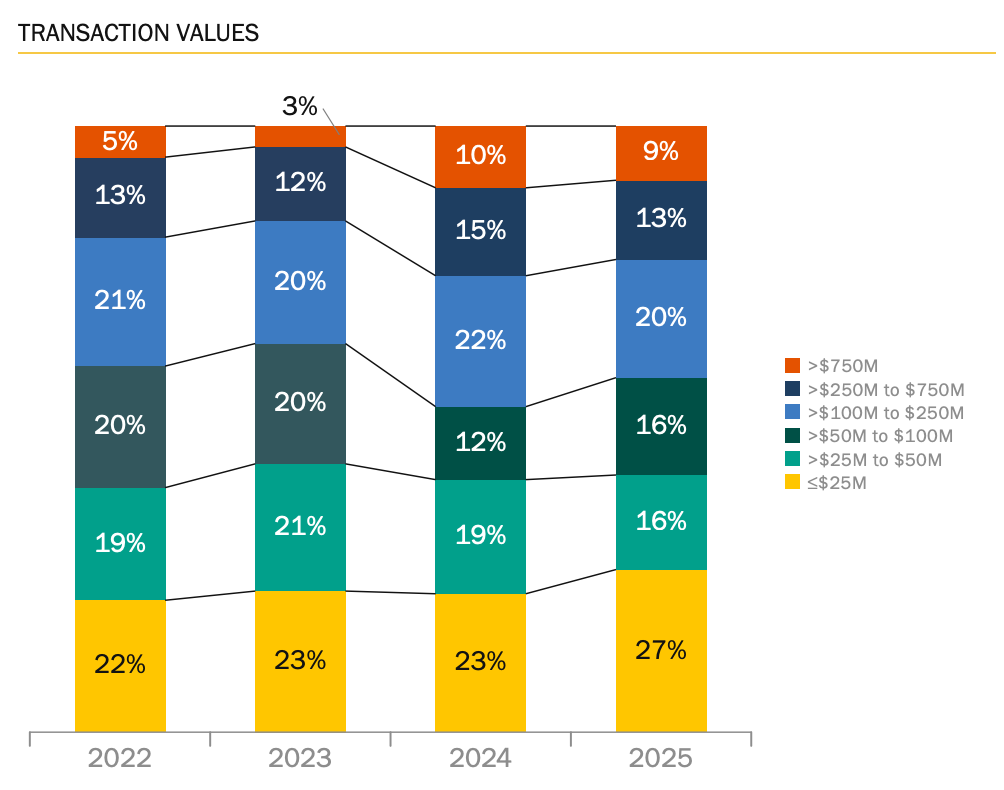
Simultaneous sign and close: Deals that are <$134M can skip HSR so they can often close at the same time as signing.
Sign and close later: >$134M requires HSR approval so you generally have to wait until the HSR waiting period expires before closing.
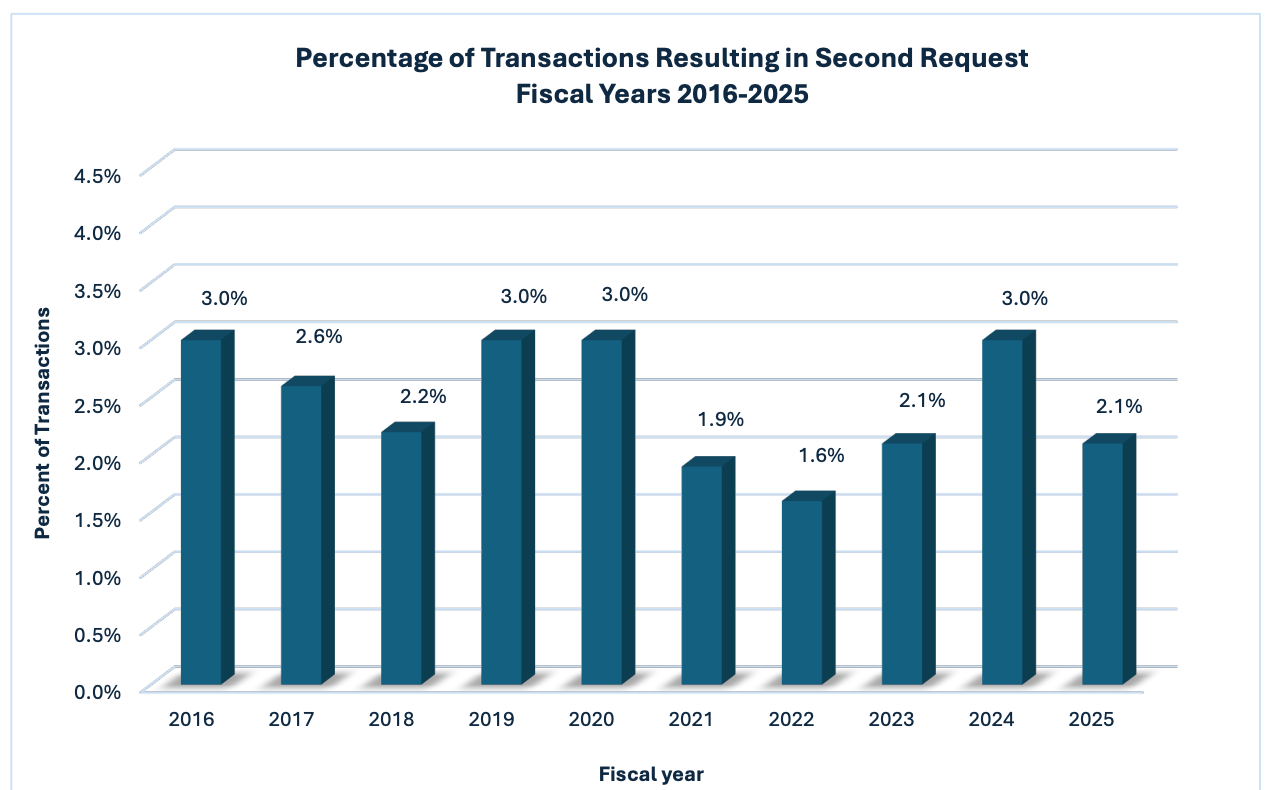
HSR requires both parties to notify the FTC and DOJ and wait 30 days (the waiting period) before closing. If the 30 days pass without a “Second Request” from either agency then you can close (assuming nothing else is pending). If one of the agencies has a request…you have to gather it, submit it, and then the waiting period resets (you have to wait another 30 days from 2nd submission)
Luckily not that many acquisitions have a second HSR request (see below). But if it does receive one, it can add a lot of time to closing.
A lot of deals sign the definitive agreement and close at the same time.
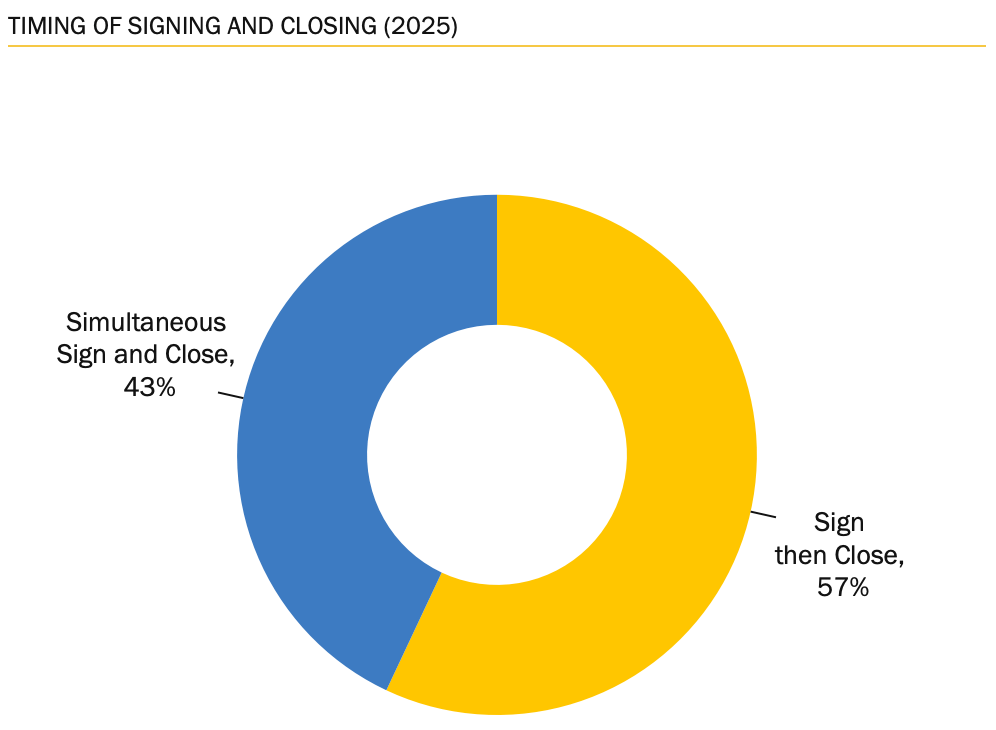
The 43% that have a simultaneous close mostly come from transactions with a deal value less than the HSR threshold of $134M.
HSR is just for U.S. regulatory bodies. If there is international presence then it may need clearance from others like the UK, EU, etc. We all know the EU likes to take their sweet time on things…
Then there are also industry regulators (industries like banking, insurance, defense) that may also add time.
Final Thoughts
Until cash hits the bank, nothing is guaranteed in M&A. Lots of deals fall apart throughout the process…
The goal of the executive team is to run a good process to maximize deal value (and optimize for other things that matter to the seller). Understanding what to negotiate, and when, is a key part of running a good M&A process. For example, don’t neglect the LOI because it’s non-binding on price. It is one of the most important stages of the process.
Ryan Klinefelter (Investment Banking Exec at Woodside Capital Partners) told me the following:
Selling your company is like a complex project management process. You can never be organized enough. You always need to plan for timeline slippages and external risks like stock market corrections or elections or even foreign wars shaking the confidence of buyers. You need to keep communications tight/confidential/continuous. And you need the smartest brains in the room combined with a little bit of luck to get a winning exit for your company.
*Thanks to Ryan Klinefelter and Dirk Sahlmer for reviewing and providing feedback!
Footnotes:
Talk to my friends at Brex for a true AI-native spend platform
Email onlycfo@onlycfo.io for sponsorship opportunities
Subscribe and share with your friends
*Disclosure: Nothing discussed in this post is financial, tax, or investment advice.
On who is involved, I would suggest that you add M&A Technology Consultant for external review and assessment of IT Infrastructure, Product Code and Cybersecurity Risks. Good value for $ spent, where Investment Banker fees are the worst value for $ spent if you are on the buy side (provided you have internal expertise).